Hot Wallet vs Cold Wallet: How to Choose Where to Store Crypto
Hot wallet vs cold wallet is a storage decision about one thing: whether your private keys stay connected to the internet. Online keys favor speed. A cold wallet flips that trade by keeping keys offline for long-term protection, and most US holders end up running both: a hot wallet for small balances and a cold one for savings.
Key Takeaways
The five points below summarize the hot and cold wallet decision for US crypto holders. Read them first. They cover security, custody risk, setup, recovery and taxes, so anyone who only skims this page still leaves with a clear rule for where each dollar of crypto they own belongs today. For specific picks, see our ranking of the best cold wallet for crypto.
- A hot wallet is a crypto wallet connected to the internet, which makes it fast to use and more exposed to phishing and malware.
- A cold wallet is a crypto wallet that stores private keys offline, usually on a hardware device, which blocks remote attacks on those keys.
- Federal Deposit Insurance Corporation (FDIC) insurance does not cover crypto. Securities Investor Protection Corporation (SIPC) protection does not cover crypto that is not a registered security.
- A seed phrase of 12 or 24 words restores a wallet on a new device. Losing both the device and the seed phrase means losing the funds permanently.
- Moving crypto between wallets you own is not a sale for Internal Revenue Service (IRS) purposes, but you must keep cost basis records for each wallet.
- Keep spending money in a hot wallet and move any amount you are not willing to lose into a cold wallet.
Hot Wallet vs Cold Wallet at a Glance
A hot wallet stores crypto private keys on an internet-connected device for quick access, while a cold wallet stores private keys offline for stronger protection. The trade-off is simple. Hot wallet vs cold wallet comes down to convenience against security, and the right pick depends on how often you move funds and how much you’re holding.
This table compares hot and cold wallets across the factors that matter most to US holders.
| Factor | Hot Wallet | Cold Wallet |
|---|---|---|
| Internet Connection | Always or often online | Offline, even while signing |
| Private Key Location | Phone, computer or exchange server | Hardware device, paper or steel |
| Best For | Spending, trading, decentralized finance (DeFi) | Long-term holding |
| Main Threats | Phishing, malware, exchange hacks | Physical theft, lost seed phrase |
| Cost | Usually free | One-time hardware purchase |
| Speed | Instant | Slower, needs the device |
| Beginner Friendliness | High | Moderate |
Think of a hot wallet as the cash in your pocket and a cold wallet as a home safe. Neither one is a bank account. Each is a tool for controlling private keys, and how secure it is depends entirely on how carefully the owner guards those keys.

What Is a Hot Wallet?
A hot wallet is a software crypto wallet that stays connected to the internet, letting the owner send, receive and trade digital assets within seconds. Formats vary. Hot wallets run as mobile apps, desktop programs, browser extensions or exchange accounts, and every one of them holds the private keys that authorize every transaction on the device or server.
A private key is a secret number that proves who owns the crypto sitting at a particular public address on the blockchain. Whoever holds it controls the funds.
Location is the weak spot. A hot wallet’s private key sits on a personal device such as a phone or laptop, or else on an exchange server, and attackers can reach those machines over the internet.
Speed is the payoff, though. No extra hardware sits between a hot wallet and DeFi apps or crypto exchanges, and payment requests get handled just as directly from the same screen.
Types of Hot Wallets
Hot wallets come in four formats. Each one handles keys its own way, and the split that matters most is whether you or a company ends up holding them.
This table compares the four main hot wallet formats and common examples available in the USA.
| Type | How It Works | Common Examples | Custody |
|---|---|---|---|
| Exchange or Broker Account | Company holds keys for you | Coinbase, Kraken, Robinhood | Custodial |
| Mobile Wallet | Phone app stores encrypted keys | Trust Wallet, Exodus | Non-custodial |
| Browser Extension | Plug-in signs web app transactions | MetaMask, Phantom | Non-custodial |
| Desktop Wallet | Computer program stores keys | Exodus, Electrum | Non-custodial |
Custodial means a company controls the keys. Go non-custodial and you’re the one holding both the keys and the recovery phrase, with no support desk to call if either goes missing.
Is MetaMask a Hot Wallet?
Yes. MetaMask is a non-custodial hot wallet that runs as a browser extension and a mobile app, storing encrypted keys right on the user’s own device.
Ledger and Trezor devices pair with MetaMask. Once they’re paired, the hardware device signs each transaction offline, and MetaMask does nothing more than act as the interface on screen.
What Is a Cold Wallet?
A cold wallet is a crypto wallet that generates and stores private keys on a device that never connects directly to the internet, which blocks remote hackers from reaching those keys. The cold wallet meaning is plain. It’s offline key storage, and most of the time that storage takes the form of a hardware wallet such as a Ledger or Trezor device.
A hardware wallet links up with a computer or phone over a Universal Serial Bus (USB) cable or a Bluetooth connection, yet nothing secret crosses that link. Keys never leave the protected chip.
Signing happens inside the device. Only the signed result travels back to the connected app, which means the computer on the other end never gets to see the private key at all.
Many hardware wallets use a secure element. That tamper-resistant chip, similar to the one in a credit card, is designed to resist physical attempts to extract keys, even when an attacker has the device in hand.
What Is Cold Storage in Crypto?
The query “what is cold storage crypto” has a direct answer. Cold storage is the practice of keeping private keys offline, well away from any system that’s connected to the internet, even for a moment. It’s a habit, not a gadget.
The two terms differ. A cold wallet is the tool, and cold storage is the method. Exchanges rely on the same method internally, parking customer funds in their own offline vaults instead of on servers that sit online all day. Our top 10 crypto exchanges list shows which ones publish proof of reserves.
Air-gapped devices go furthest. An air-gapped device never connects to anything by cable or wireless link, passing transaction data through QR codes or a microSD card instead, which makes it the strictest form of cold storage.
Types of Cold Wallets
The options span a lot of ground. Cold wallets run from simple paper backups all the way up to multisignature (multisig) vaults, which require two or more keys, such as 2 of 3, to approve a transaction.
This table compares common cold wallet formats by key storage, ease of use and main risk.
| Type | Key Storage | Ease of Use | Main Risk |
|---|---|---|---|
| Hardware Wallet | Secure chip on a USB or Bluetooth device | Moderate | Lost seed phrase, fake devices |
| Air-Gapped Device | Offline device using QR or microSD | Lower | Setup mistakes |
| Paper Wallet | Keys printed on paper | Low | Fire, water, printer malware |
| Multisig Vault | Keys split across several devices | Low | Complex recovery |
Paper wallets are outdated. Printing a key exposes it to whatever computer and printer produced it, which is why a hardware wallet is the better choice for nearly every holder.
How Are Cryptocurrency Hot Wallets Different from Cold Wallets?
Cryptocurrency hot wallets differ from cold wallets in where the private key lives and where transactions get signed: hot wallets sign on an online device, while cold wallets sign inside an offline device. Nothing gets locked in, either. Both wallet types use standard blockchain addresses, so a hot vs cold wallet choice is never permanent and coins move freely between them on the same network.
Where the Private Key Lives
A hot wallet keeps the private key in software on a phone or computer, or on an exchange server, and that software shares the machine with everything else installed, from email to web browsers. That’s plenty of company.
A cold wallet does the opposite. Its private key lives on dedicated hardware built for exactly two jobs, protecting keys and signing transactions, and nothing like a browser or an email client ever runs on it.
How Transactions Get Signed
A hot wallet handles the whole transaction, from building it to broadcasting it, on one online device. That’s the weak point. Malware sitting on that same device can watch the transaction or quietly alter it before it leaves, which is exactly the opening attackers look for.
A cold wallet splits the job. The connected app builds an unsigned transaction and hands it over. The hardware wallet then shows the address and amount on its own screen, and nothing gets signed until the owner presses a physical button to confirm.
Screen verification beats clipboard malware. Clipboard malware swaps a copied crypto address for the attacker’s own, but the hardware screen displays the real destination, so any mismatch shows up before you sign.
Custodial vs Non-Custodial Wallets
Every cold wallet is non-custodial. Hot wallets can go either way. Self-custody means you hold the keys yourself, so no company can freeze or lend out your coins, and there’s no company around to lose them, either.
This table compares custodial and non-custodial wallets on control and recovery.
| Feature | Custodial Wallet | Non-Custodial Wallet |
|---|---|---|
| Who Holds Keys | The company | You |
| Password Reset | Available through support | Not possible; seed phrase only |
| Exchange Failure Risk | Yes | No |
| Examples | Coinbase account, Kraken account | MetaMask, Ledger, Trezor |
Cold Wallet vs Hot Wallet Security Comparison
Cold wallets are safer than hot wallets against remote attacks because the private key never touches an internet-connected system, so malware and phishing sites cannot extract it. Convenience is another story. In any cold vs hot wallet matchup, the hot wallet takes that round, while the cold wallet wins on protection for long-term balances.
This table gives a cold wallet vs hot wallet view of exposure to each major threat.
| Threat | Hot Wallet Exposure | Cold Wallet Exposure |
|---|---|---|
| Remote Malware | High | Very low |
| Phishing Websites | High | Low if the device screen is checked |
| Exchange Hack or Failure | High for custodial accounts | None |
| Physical Theft | Low with a phone lock | Low with a PIN |
| Lost Seed Phrase | Total loss for non-custodial | Total loss |
| Fake Support Scams | High | High |
Two threats hit both wallet types equally: a lost seed phrase and social engineering. Neither is technical. No hardware can protect an owner who hands the seed phrase to a scammer, no matter how well built its chip is.
Common Hot Wallet Threats
Hot wallet attacks go after what’s online. That means the device itself or the browser running on it, and for custodial users, the exchange account as well.
- Phishing attack: A fake website or app copies a real wallet and asks the user to enter a recovery phrase.
- Malware: Keyloggers and clipboard hijackers steal passwords or swap destination addresses.
- Wallet drainers: Malicious smart contracts trick users into approving unlimited token spending.
- SIM swap: An attacker takes over a phone number to intercept text-message login codes for an exchange account.
- Exchange hack or collapse: A custodial platform loses customer funds through theft or insolvency.
Protect every exchange account with two-factor authentication (2FA) from an authenticator app or a hardware security key rather than text messages. Text-message codes are the weakest 2FA option.
Can a Cold Wallet Be Hacked?
Yes, but rarely through the device itself. A properly set up hardware wallet resists remote hacking so well that attackers usually skip it and go after the owner instead.
In 2020, Ledger disclosed a breach of its e-commerce and marketing database that exposed customer contact details, including names and mailing addresses for some buyers. Scammers later put that data to work. Phishing emails and texts followed, along with mailed packages that contained fake devices.
Cold wallet owners face four realistic threats: fake firmware update emails, tampered devices from unauthorized sellers, fake support agents asking for a seed phrase and physical theft of a written backup. Ignore any request for the phrase. No legitimate hardware wallet company ever asks for a seed phrase.
Is Coinbase a Hot or Cold Wallet?
A Coinbase exchange account is a custodial hot wallet: you see your balance online and trade instantly, but Coinbase controls the private keys. The catch is trust. Coinbase states that it keeps most customer crypto in offline cold storage on its side, yet the account owner still depends on the company rather than holding any keys personally.
A separate Coinbase product works differently. Its self-custody wallet app is a non-custodial hot wallet, which means the user holds the recovery phrase and Coinbase can’t reset it if it’s lost.
Why Exchange Custody Carries Risk in the USA
US exchange accounts lack the federal protections that cover bank deposits and brokerage securities, so the customer carries the risk when an exchange fails. No federal safety net applies.
This table compares the protection available for cash, stocks and crypto held at US firms.
| Holding | Protection | Covers Crypto |
|---|---|---|
| Bank Deposits | FDIC insurance up to $250,000 | No |
| Brokerage Securities | SIPC up to $500,000 | No, unless a registered security |
| Crypto on an Exchange | No federal insurance | N/A |
| Crypto in a Cold Wallet | Owner’s own security | N/A |
FTX, once a major crypto exchange, halted customer withdrawals and filed for bankruptcy in November 2022. Customers lost access to their funds. Repayments didn’t start until 2025, so account holders spent the entire bankruptcy process waiting to see any of their money come back.
Failures like FTX are where the crypto saying “not your keys, not your coins” comes from. The fix is simple. A cold wallet removes the exchange from the chain of trust, so no company’s balance sheet stands between you and your own coins.
Do I Need a Cold Wallet?
Yes, you need a cold wallet if you hold crypto you plan to keep for months or years, or any balance you could not afford to lose in an exchange failure or hack. Small traders have more time. Holders who only trade small amounts on Coinbase or Robinhood can wait, but anyone building long-term savings in Bitcoin benefits from moving those funds offline. Active traders can compare fees on each crypto trading platform in our ranking.
A cold wallet crypto setup costs a one-time hardware purchase, with no monthly fee attached, and that price stays flat no matter how large the protected balance grows. Bigger balances make it cheaper per dollar.
A Balance-Based Decision Rule
Each pool of money has a job. Match it to the wallet built for that job, and the right choice becomes obvious as soon as you know your holding period and balance size.
This table maps common holding situations to a recommended wallet.
| Situation | Recommended Wallet | Reason |
|---|---|---|
| Small test amount | Exchange account | Simple, password reset available |
| Weekly trading or DeFi use | Non-custodial hot wallet | Fast access, you hold keys |
| Savings held one year or longer | Hardware cold wallet | Offline keys, no exchange risk |
| Balance worth many times a hardware wallet’s price | Hardware cold wallet | Device cost is small versus risk |
| Large holdings or estate planning | Multisig cold setup | No single point of failure |
Still unsure? Apply one test: if losing the balance tomorrow would change your financial plans, that balance belongs in cold storage, whatever its size.
The Two-Wallet Setup
A two-wallet setup gives you fast access to spending money and offline protection for savings, without forcing a choice between the two. Here’s how it runs.
- Keep a small spending balance in a hot wallet or exchange account.
- Store long-term savings on a hardware wallet.
- Connect the hardware wallet to MetaMask or the maker’s app only when you need to sign.
- Refill the hot wallet from cold storage on a fixed schedule, such as monthly.
- Review the split every quarter and move excess hot wallet funds back offline.
Ledger vs Trezor Compared
Ledger and Trezor are two widely used hardware wallet brands in the USA, and both keep private keys offline; Ledger favors secure element chips across its lineup, while Trezor favors open-source firmware. Where you buy matters. Either brand works as a cold wallet when it’s bought directly from the manufacturer or from an authorized reseller, never from an unknown third party.
This table compares Ledger and Trezor on features that affect security and daily use.
| Feature | Ledger | Trezor |
|---|---|---|
| Firmware Source | Partly closed source | Open source |
| Secure Element Chip | Yes, current models | Yes on Safe 3 and Safe 5 |
| Companion App | Ledger Live | Trezor Suite |
| Optional Backup Service | Ledger Recover, paid, opt-in | No equivalent service |
| Official Store | ledger.com | trezor.io |
Choose Trezor if open-source code that independent researchers can audit matters most to you, since anyone can inspect how the firmware handles keys. Ledger fits a different priority. It suits buyers who want a secure element on every model plus broad app support.
Other reputable options exist too, including air-gapped devices such as Coldcard and Keystone, which skip cables and wireless links altogether. Sourcing still matters. Whatever the brand, buy from the official store and skip third-party marketplace sellers on Amazon or eBay entirely.

How to Use a Cold Wallet and Move Crypto Offline
To use a cold wallet, buy a hardware wallet directly from the manufacturer, initialize it on the device itself, write down the seed phrase, send a small test transaction and then move the full balance. No technical background is needed. The hardware wallet setup asks only for patience and a pen, and it goes best in a quiet room where nobody can watch you write the seed phrase down. Our guide on how to create a crypto wallet walks through each step.
Initialize the Hardware Wallet
Order matters here. Complete these steps before any crypto touches the device, and don’t skip ahead to funding the wallet, however tempting that feels.
- Order the device from the official manufacturer website or an authorized reseller.
- Inspect the packaging and reject any device that arrives with a pre-filled seed phrase card.
- Download the companion app only from the manufacturer’s official site.
- Connect the device and follow the prompts to install genuine firmware.
- Set a personal identification number (PIN) code on the device itself.
- Write the 12-word or 24-word seed phrase by hand on the supplied card, in order.
- Confirm the seed phrase on the device when prompted.
- Store the seed phrase offline, never in a photo, email, cloud note or password manager.
Send a Test Transaction
Start small. A test transaction proves the full send-and-receive cycle works from end to end before any real money moves to the new device.
- Open the companion app and copy the receiving address.
- Compare the address on the hardware wallet screen against the copied address character by character.
- Choose the matching network on the exchange withdrawal page, because sending a coin over an unsupported network can lose the funds.
- Withdraw a small amount from Coinbase or your hot wallet.
- Wait for the transaction to confirm on the blockchain.
- Send a small amount back out to confirm the device can spend.
- Wipe the device and restore it from the seed phrase to prove the backup works.
- Move the remaining balance once the restore succeeds.
What Happens If You Lose Your Cold Wallet?
Losing a cold wallet does not mean losing your crypto, because the funds live on the blockchain and the seed phrase restores full access on a new compatible device. Losing both is different. If the hardware wallet and the seed phrase are both gone, so is the crypto, permanently, unless the owner enrolled in an opt-in recovery service.
Most wallets follow the Bitcoin Improvement Proposal 39 (BIP39) standard for seed phrases, which is why recovery isn’t tied to a single manufacturer. Brand loyalty isn’t required. A BIP39 phrase from one brand can restore on another compatible wallet.
Theft alone won’t empty a hardware wallet, because its PIN stands in the way and the device wipes itself after a set number of wrong PIN attempts. Guessing doesn’t work.
Restore the seed phrase on a new device right away if your hardware wallet goes missing or gets stolen. Suspect a leak? Move the funds to a fresh wallet with a brand-new seed phrase if there’s any chance someone saw the old one.
Seed Phrase Backup Methods
Devices are replaceable. The seed phrase backup matters more than the hardware itself, because that backup is the only path back to your funds after a loss.
This table compares seed phrase backup methods by durability.
| Method | Fire Resistance | Water Resistance | Verdict |
|---|---|---|---|
| Paper Card | Low | Low | Short term only |
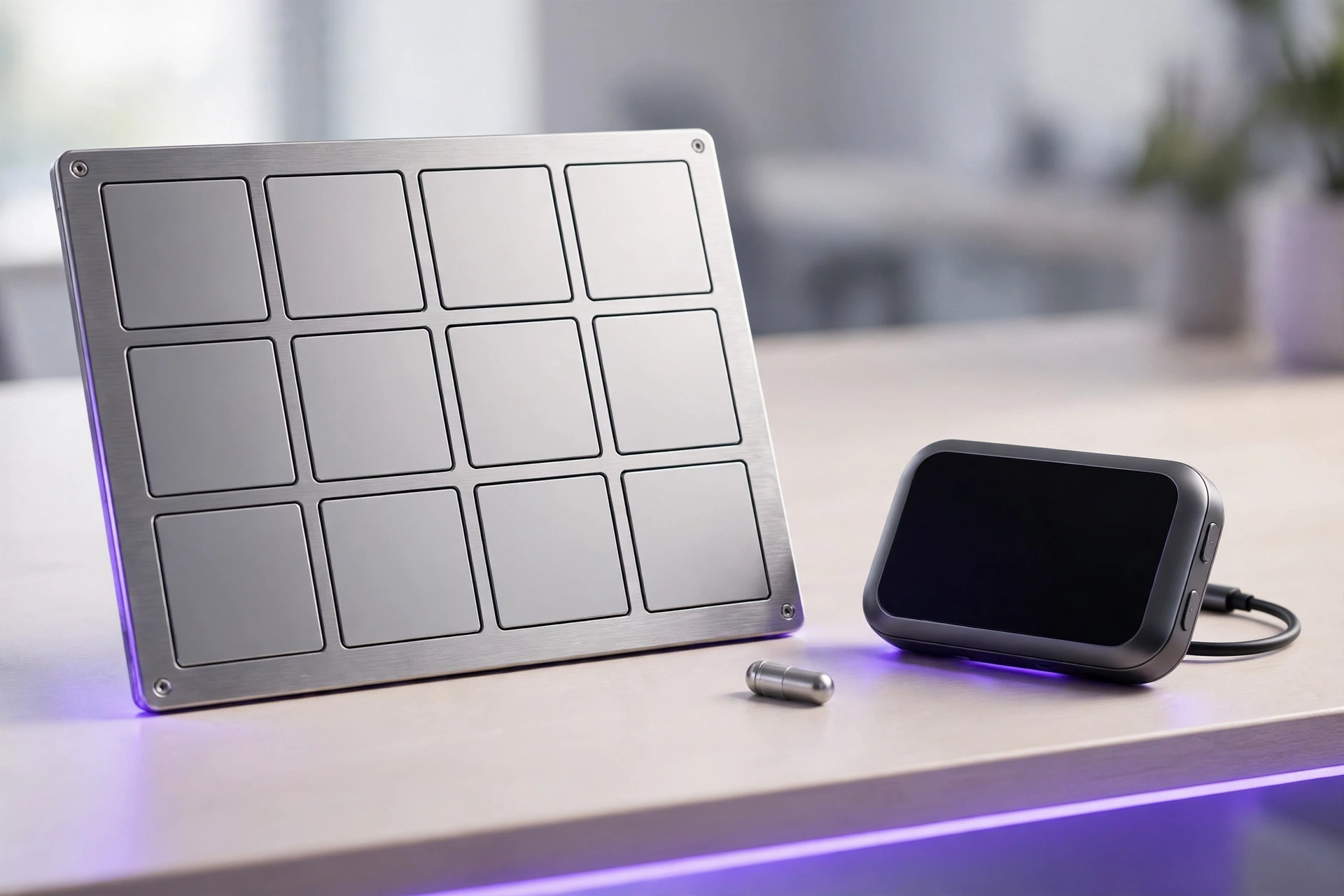
| Steel Plate or Capsule | High | High | Best for long term |
| Paper in Fireproof Safe | Moderate | Moderate | Acceptable |
| Bank Safe Deposit Box | High | Moderate | Good second location |
| Photo or Cloud Note | N/A | N/A | Never use |
Steel pays off most in disaster country. Holders in hurricane, flood or wildfire zones, such as Florida, the Gulf Coast or California, have the most to gain from switching their backups to steel.
Keep two backups, each in a separate location. Heirs need written instructions on where to find the backup, but the seed phrase itself should never go into a will, because wills can become public records during probate. Plan around that.
Is Moving Crypto to a Cold Wallet Taxable?
No, moving crypto from an exchange to your own cold wallet is not a taxable sale, because the IRS taxes disposals such as selling, trading or spending crypto, not transfers between wallets you own. Two details still count, though. Network fees paid in crypto and your cost basis records both affect whether your tax reporting comes out accurate.
Under Notice 2014-21, the IRS treats digital assets as property. That label has consequences. When you sell, any gain or loss gets calculated against your cost basis, so the original purchase records follow the coins wherever they go.
Revenue Procedure 2024-28 changed the bookkeeping. Starting January 1, 2025, the IRS requires cost basis to be tracked separately for each wallet or account, and a cold wallet counts as its own wallet for this purpose.
Form 1099-DA came next. Brokers began reporting digital asset sales on it for transactions on or after January 1, 2025, while basis reporting on the same form begins for certain assets acquired on or after January 1, 2026. Brokers lose sight of coins, though, once those coins leave the exchange for a cold wallet.
Fees count too. A network fee paid in crypto can be treated as a disposal of that small amount, so record every one, since the IRS expects the owner to track gains and losses on assets the broker no longer reports.
Records to Keep for Every Transfer
Once coins leave a platform, the broker stops tracking their cost basis, and the job of carrying those records forward falls to you. Nobody else will do it.
This table compares the records to keep for each wallet transfer and why each one matters.
| Record | Example | Why It Matters |
|---|---|---|
| Transfer Date | Date and time of withdrawal | Matches exchange and blockchain records |
| Asset and Amount | Bitcoin amount sent | Confirms the quantity moved |
| Transaction ID | Blockchain hash | Proves the transfer was between your wallets |
| Sending and Receiving Addresses | Exchange address, cold wallet address | Shows you own both ends |
| Network Fee | Fee amount and asset | Supports gain or loss on the fee |
| Original Cost Basis | Purchase price and acquisition date | Required to calculate gain when sold |
Export a transaction history from each exchange every year and file it alongside your wallet addresses so the full paper trail sits in one place. Software helps here. Crypto tax tools can import public addresses without ever needing your private keys or seed phrase.
Conclusion
The hot wallet vs cold wallet choice comes down to one rule: keep spending money online and keep savings offline, because only a cold wallet removes both remote hackers and exchange failures from the risk chain. Pairing works best. US holders who run a hot wallet alongside a hardware wallet get speed and safety together, with no need to give up one for the other.
Self-custody tools keep getting easier. Hardware wallets now connect to mobile apps, DeFi platforms and browser wallets like MetaMask, so offline storage no longer means giving up access.
Tax reporting is tightening as well. Form 1099-DA and the per-wallet cost basis rules turn clean transfer records into a yearly habit rather than something you scramble to rebuild at filing time.
Start small. Buy one hardware wallet from the official store, back up the seed phrase on steel, run a test transaction and move your long-term balance offline this month.
Frequently Asked Questions

James
James leads crypto content at Crypto By Chance, covering exchanges, wallets, trading platforms, and blockchain technology. He researches trading fees, security features, market mechanics, and crypto regulations to explain a fast-moving market clearly. His guides and comparisons help readers evaluate their options, manage risk, and make informed decisions about digital assets.
Related Posts