
Proof of Stake vs Proof of Work: How Each Blockchain Model Works
Proof of stake vs proof of work comes down to how a blockchain picks who adds the next block. It’s a question of cost. Proof of work (PoW) makes miners spend electricity solving computing puzzles, while proof of stake (PoS) makes validators lock up coins as collateral. PoW secures Bitcoin. Ethereum runs on PoS, and it uses far less energy as a result.
Key Takeaways
- A consensus mechanism is a set of rules that lets thousands of independent computers agree on one shared transaction history without a central authority.
- Proof of work secures Bitcoin by making miners spend electricity and specialized hardware to add new blocks.
- Proof of stake secures Ethereum, Cardano and Solana by making validators lock up coins that the protocol can destroy if a validator cheats.
- Proof of stake uses far less energy than proof of work, and energy use was a main reason Ethereum switched to proof of stake on September 15, 2022.
- Proof-of-stake coins can’t be mined. Holders earn proof-of-stake rewards by staking instead.
- The Internal Revenue Service (IRS) treats both staking rewards and mining rewards as taxable income once the holder gains control of them.
What Is Proof of Work?
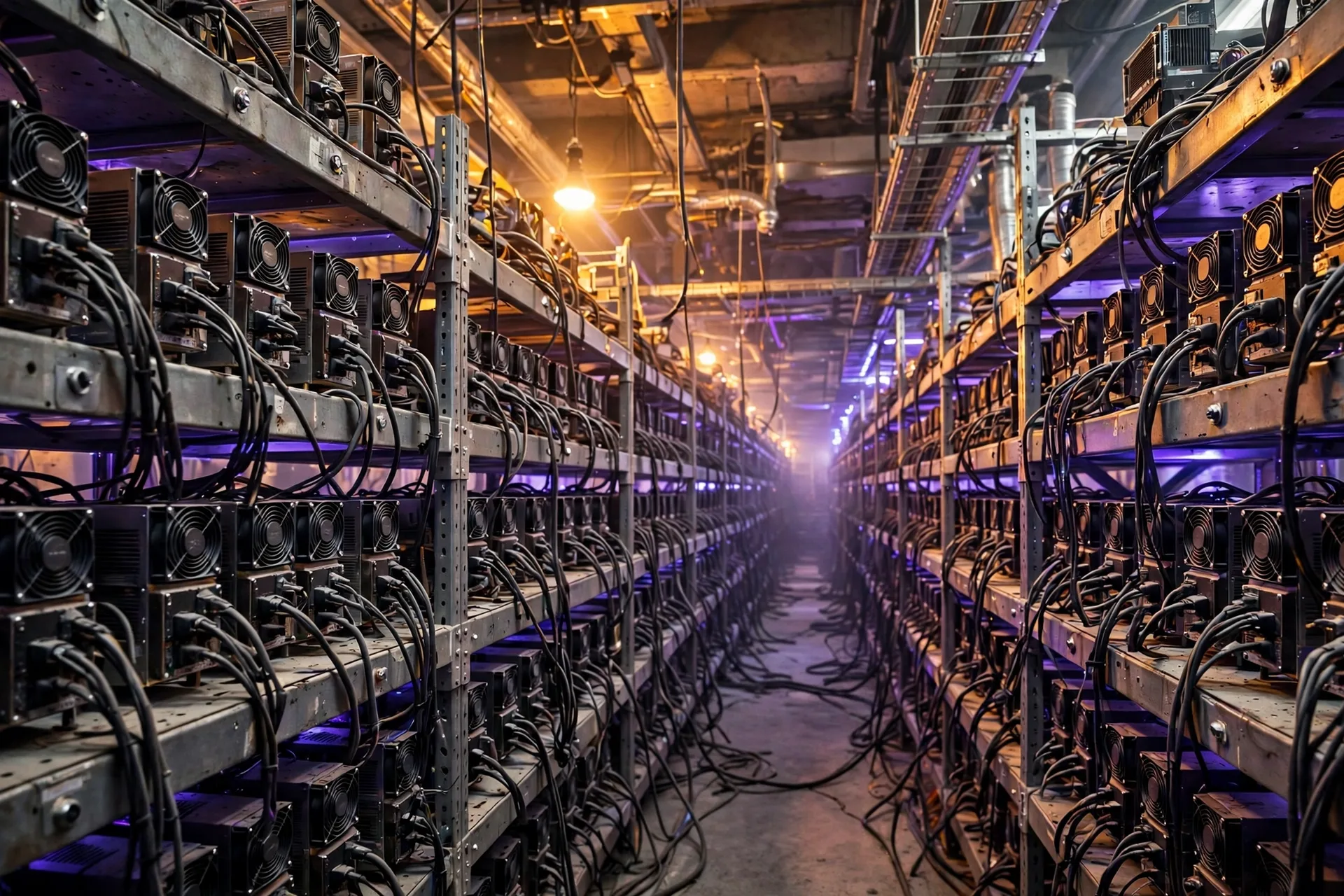
Proof of work (PoW) is a consensus mechanism that requires miners to spend computing power and electricity to win the right to add the next block. Miners race to find a number that produces a valid hash. The fastest one wins. That miner broadcasts the block and collects the reward. Satoshi Nakamoto built Bitcoin on this model, which people often call Nakamoto consensus.
Mining’s cost is the security feature. Anyone who wants to rewrite the transaction history has to redo the work, and redoing it means paying real money for hardware and power.
How Bitcoin Mining Works
Bitcoin mining turns electricity into network security through a repeating cycle. First, miners gather pending transactions into a candidate block. Then comes the hashing. They run that block through the hash function over and over, tweaking one small value each time, until the output falls below a target the network sets.
Any single guess costs almost nothing. Finding a winning hash, though, takes an enormous number of guesses, which is why the process works like a lottery in which every ticket costs electricity. The more computing power a miner controls, the more tickets that miner buys.
The total computing power on the network is called the hash rate. Hash rate never sits still. Bitcoin automatically raises or lowers its mining difficulty as hash rate rises or falls, so blocks keep arriving at a steady pace.
Modern Bitcoin mining runs on application-specific integrated circuit (ASIC) miners. An ASIC miner is a machine built for one job: computing Bitcoin hashes as fast as possible. Nothing else comes close. Home computers and graphics cards simply can’t compete with these machines on Bitcoin, because they produce far fewer hashes for every watt they draw.
This design provides Sybil resistance. Creating thousands of fake identities gives an attacker no advantage, because influence comes from hash rate rather than from the number of nodes on the network.
What Miners Earn
Bitcoin miners earn two types of income: a block reward of newly created bitcoin and the transaction fees users attach to their transactions. Both are paid in bitcoin.
Every halving cuts the block reward in half on a fixed schedule. The latest came in April 2024. Unless the bitcoin price or transaction fees climb enough to cover the gap, each halving takes a direct bite out of miner revenue.
Mining profitability depends on four variables: the bitcoin price, the network’s mining difficulty, the efficiency of the miner’s hardware, and the miner’s cost of electricity. All four change constantly. That’s why this article cites no verified profitability figure.

What Is Proof of Stake?
Proof of stake (PoS) is a consensus mechanism that selects validators to propose and confirm blocks based on coins they lock up as collateral, called stake. Validators who follow the rules earn staking rewards. Cheating costs money. A validator caught breaking the rules loses part of its stake through a penalty called slashing. Ethereum runs on proof of stake, and so do Cardano and Solana.
Proof of stake swaps spent energy for capital at risk. An attacker has to buy and lock a large amount of the network’s own coin, and the protocol can destroy that coin if the attacker misbehaves. Misbehaving gets expensive fast.
How Validators Are Chosen
Ethereum requires 32 ETH to activate a solo validator. That’s the entry ticket. From there, the protocol pseudo-randomly picks one validator to propose each new block, and committees of other validators then vote on, or “attest to,” that block.
Validators with more effective stake get selected more often. The Pectra upgrade introduced Ethereum Improvement Proposal (EIP) 7251, which raised the maximum effective balance per validator. That change matters for big players. Large operators can consolidate many validators into fewer ones, so a single validator can now carry a much larger balance than before.
Other PoS networks pick validators differently. Cardano runs a protocol called Ouroboros and lets holders delegate their stake to stake pools, while Solana pairs proof of stake with a timekeeping method called proof of history.
What Validators Earn
Ethereum validators earn rewards from three sources: newly issued ETH for proposing and attesting, priority fees that users pay to get their transactions included, and maximal extractable value (MEV) from transaction ordering. Each one fluctuates.
Penalties exist too. A validator that goes offline loses small amounts of ETH for missed duties. Signing two conflicting blocks or contradictory votes is far worse, because it triggers slashing, which destroys part of the validator’s stake and forces it out of the network.
Yields move. Staking returns shift with network conditions, so no verified figure is available here. For current estimates, check ethereum.org and validator dashboards, both of which publish figures that update as conditions on the network shift.
Proof of Stake vs Proof of Work: Side-By-Side Comparison
Proof of work secures a blockchain with spent electricity and hardware, while proof of stake secures a blockchain with locked capital that the protocol can destroy. Everything else flows from it. That one design choice shapes every other difference in the proof of work vs proof of stake debate, from energy use and entry costs to attack economics and how fast transactions become final.
This table compares the two consensus mechanisms feature by feature.
| Feature | Proof of Work | Proof of Stake |
|---|---|---|
| Security Resource | Electricity and hardware | Locked coins (stake) |
| Block Producers | Miners | Validators |
| Main Equipment | ASIC miners | Standard computer or cloud server |
| Energy Consumption | High, scales with hash rate | Low, roughly flat per validator |
| Entry Cost | Hardware plus ongoing power bills | Stake; 32 ETH for Ethereum solo |
| Penalty for Cheating | Wasted electricity and lost rewards | Slashing destroys staked coins |
| Finality | Probabilistic, grows with confirmations | Explicit checkpoints on Ethereum |
| Largest Network | Bitcoin | Ethereum |
| Reward Sources | Block reward plus transaction fees | New issuance plus transaction fees |
This table summarizes the main pros and cons of each mechanism.
| Mechanism | Main Strengths | Main Weaknesses |
|---|---|---|
| Proof of Work | Longest track record, simple security model | High energy use, hardware arms race |
| Proof of Stake | Low energy, explicit penalties, faster finality | Stake concentration, more complex rules |

Is Proof of Stake More Energy Efficient?
Yes, proof of stake is far more energy efficient than proof of work, because validators run ordinary computers instead of racing specialized mining hardware. A validator’s electricity use resembles a home computer left on all day. Mining is different. On a proof-of-work network, energy consumption climbs alongside hash rate, and it keeps climbing as long as miners compete harder for each block.
The energy gap is the sharpest proof of work vs proof of stake blockchain difference. Adding miners to a proof-of-work network increases energy use without making blocks arrive any faster, since the difficulty simply adjusts upward to match. Extra validators barely register.
Ethereum offers the clearest real-world example. The Merge on September 15, 2022, ended Ethereum mining and cut the network’s energy use dramatically. ethereum.org publishes its own estimate of the reduction on its energy consumption page, which is the best place to look for a specific number.
Bitcoin’s electricity use is tracked by the Cambridge Bitcoin Electricity Consumption Index. That estimate isn’t fixed. No verified figure from that index appears here, because the estimate shifts every time hash rate moves up or down.
Total energy isn’t the whole story. A network’s carbon footprint depends on the energy mix behind it as well as the amount of energy used. Bitcoin supporters argue that miners can soak up power that would otherwise go to waste, such as stranded natural gas or excess wind and solar output.
Some large miners in Texas take part in demand-response programs run by the Electric Reliability Council of Texas (ERCOT), cutting their power use whenever grid demand peaks. Critics aren’t convinced. They counter that mining still piles large new loads onto a stressed grid.
Which Is More Secure, PoS or PoW?
Neither is strictly more secure: proof of work has the longer track record, while proof of stake adds explicit penalties and faster finality. Bitcoin’s proof of work has secured the largest crypto network for the longest time. PoS has one extra tool, though. Ethereum’s protocol can destroy an attacker’s stake outright, which is something proof of work has no way of doing to the mining hardware an attacker owns.
Every blockchain proof of stake vs proof of work security comparison starts with one question: what does an attacker lose? The answers differ sharply.
This table gives a Yes or No verdict on key security questions for each mechanism.
| Security Question | Proof of Work | Proof of Stake |
|---|---|---|
| Can a majority attacker rewrite blocks? | Yes, with majority hash rate | Yes, at the cost of slashed stake |
| Does the attacker lose the main resource? | No, hardware survives the attack | Yes, slashing destroys attacking stake |
| Is there explicit finality? | No, finality is probabilistic | Yes, on Ethereum via checkpoints |
| Can honest operators be penalized by mistake? | No, only wasted power | Yes, misconfigured validators can be slashed |
| Is there a long track record? | Yes, Bitcoin is the oldest | No, Ethereum PoS dates from 2022 |
51% Attacks and Their Cost
A 51% attack happens when one party controls a majority of a network’s hash rate or stake. With that majority, the attacker can reorder recent transactions and spend the same coins twice, which is exactly what the network exists to prevent. Trust breaks fast.
No verified figure is available for the cost of a 51% attack on Bitcoin or Ethereum. The inputs differ. On Bitcoin, the cost depends on acquiring and powering enough ASIC miners to outpace every honest miner. Ethereum is another story: an attacker would have to buy enough ETH to control a large share of stake, and that buying would push the ETH price up mid-purchase.
Tiny proof-of-work chains carry the most risk. Ethereum Classic and other smaller proof-of-work chains have suffered 51% attacks, because attackers can rent enough hash rate to overpower a small network.
Slashing and the Nothing-At-Stake Problem
The nothing-at-stake problem was an early critique of proof of stake. In early designs, validators could vote for multiple competing chains at no cost, because voting didn’t burn any electricity at all. Backing every fork was free.
Slashing fixes the nothing-at-stake problem. Ethereum detects validators that sign conflicting messages and destroys part of their stake, so a validator trying to support two chains at once loses real money.
Honest operators face risk too. A validator that runs the same signing keys on two machines at the same time can sign conflicting messages by accident and get slashed.
Finality and Double Spending
Finality is the point at which a transaction can’t be reversed, and it matters because it guards against double spending, meaning spending the same coins twice. Settlement depends on it.
Bitcoin offers probabilistic finality. Each new block stacked on top of a transaction makes reversal more expensive, so exchanges and merchants wait for several confirmations before they treat a payment as settled.
Ethereum’s finality is explicit. Validators vote on checkpoints, and a checkpoint becomes final once validators holding two-thirds of staked ETH approve it. Undoing a finalized checkpoint would require at least one-third of all staked ETH to be slashed, which would make the attack ruinously expensive.
Is Proof of Stake More Centralized?
Yes, proof of stake faces a distinct centralization risk, because large holders and staking providers can control a growing share of total stake. Proof of work faces its own concentration problem, though: a few large mining pools and regions with cheap electricity control much of Bitcoin’s hash rate. Neither system is immune. Decentralization depends on design and participation in both systems.
Liquid staking providers are the main concentration concern on Ethereum. Lido is the largest of them. Critics worry that any single provider controlling a large share of stake could influence block production or even censor transactions on the network. Lido spreads its stake across many independent node operators, though the debate continues.
Exchanges add another layer of concentration. Coinbase and other large US platforms run validators on behalf of customers who’d rather not deal with the hardware and upkeep of running their own.
This table compares where concentration risk shows up in each system.
| Concentration Risk | Proof of Work | Proof of Stake |
|---|---|---|
| Main Concentration Point | Large mining pools | Large staking providers |
| Main Driver | Cheap power and hardware scale | Large holdings and convenience |
| Example | Pools such as Foundry USA | Lido and major exchanges |
| Exit Speed | Switching pools is fast | Unstaking requires an exit queue |
Can You Mine Proof-Of-Stake Coins?
No, proof-of-stake coins cannot be mined, because proof-of-stake networks replace mining with validating. The phrase “PoS mining” is a common misnomer for staking. There’s nothing to mine. Instead of buying hardware and paying for electricity, holders lock up their coins and either run a validator or delegate to one, then collect staking rewards.
The intent is clear. People searching for “PoS mining” usually want to earn rewards on proof-of-stake coins, and staking is the method those networks actually use to pay them out.
This table shows what staking uses in place of each mining requirement.
| Requirement | PoW Mining | PoS Staking |
|---|---|---|
| Hardware | ASIC miner | Ordinary computer, or none if delegated |
| Ongoing Cost | Electricity and cooling | Small power bill or service fee |
| Capital at Risk | Hardware value | Staked coins, via slashing |
| Reward | Block reward plus fees | Staking rewards plus fees |
| Noise and Heat | Loud, hot, needs ventilation | Minimal |
Is Bitcoin Proof of Work or Proof of Stake?
Bitcoin uses proof of work and has no accepted plan to switch to proof of stake. Miners compete for each block with ASIC hardware, while the protocol’s difficulty adjustment keeps block production steady as hash rate changes. The design is deliberate. Many Bitcoin developers regard proof of work as the foundation of Bitcoin’s security and neutrality.
Three main reasons keep Bitcoin off proof of stake. The first is culture. Bitcoin changes slowly and conservatively, and any consensus change would need near-universal agreement among node operators, developers and miners.
Economics comes second. Many Bitcoiners argue that proof of work ties security to a cost outside the system, one that can’t be printed or acquired simply by already owning coins.
The third concerns fairness. Critics of proof of stake say it rewards existing holders with more coins, which can entrench early wealth. Proof-of-stake supporters respond that mining rewards also flow to whichever operators have the most capital to spend on machines and power.
Why Did Ethereum Switch to Proof of Stake?
Ethereum switched to proof of stake to cut energy consumption, lower the cost of securing the network, and prepare for future scaling upgrades. Known as the Merge, the switch happened on September 15, 2022. It joined Ethereum’s original execution layer to the Beacon Chain, a proof-of-stake chain that had already been running in parallel. Two chains became one.
Ethereum co-founder Vitalik Buterin had advocated proof of stake for years before the Merge. Issuance dropped too. Because the protocol no longer had to pay miners enough to cover their hardware and electricity costs, the Merge cut the amount of new ETH being issued.
The Merge didn’t change Ethereum’s transaction capacity. Later upgrades built on the proof-of-stake design, including an upgrade that enabled staking withdrawals and the Pectra upgrade that raised the maximum effective validator balance.
Which Coins Use Proof of Work or Proof of Stake?
Bitcoin, Litecoin, Dogecoin, Monero, Bitcoin Cash and Ethereum Classic use proof of work, while Ethereum, Cardano, Solana, Avalanche and Polkadot use proof of stake. Proof-of-work coins mostly date from Bitcoin’s early era. Newer platforms lean the other way. Most recent smart contract platforms either launched on proof of stake from day one or migrated to it later, as Ethereum did in 2022.
This table sorts major coins by consensus mechanism, the core proof of stake vs proof of work blockchain split.
| Coin | Consensus | Notes |
|---|---|---|
| Bitcoin (BTC) | Proof of work | SHA-256 hashing, ASIC mining |
| Litecoin (LTC) | Proof of work | Scrypt hashing |
| Dogecoin (DOGE) | Proof of work | Merge-mined with Litecoin |
| Monero (XMR) | Proof of work | RandomX, designed for CPU mining |
| Ethereum Classic (ETC) | Proof of work | Kept mining after Ethereum’s Merge |
| Ethereum (ETH) | Proof of stake | Switched at the Merge in 2022 |
| Cardano (ADA) | Proof of stake | Ouroboros protocol, delegated stake pools |
| Solana (SOL) | Proof of stake | Paired with proof of history |
| Avalanche (AVAX) | Proof of stake | Validators stake AVAX |
| Polkadot (DOT) | Proof of stake | Nominated proof-of-stake model |
How to Earn Rewards: A Decision Guide for US Holders
Choose Bitcoin mining only with cheap electricity and suitable space, choose solo staking if you hold 32 ETH and can keep a node online, and choose exchange or liquid staking for convenience in exchange for fees and counterparty risk. No path is free. Each one carries its own costs and risks, plus distinct tax consequences for US holders.
The proof of stake vs. proof of work choice for an individual is really a choice among four earning paths. Four, not two.
This table compares those paths for US holders.
| Path | Upfront Need | Main Risk | Tax Treatment |
|---|---|---|---|
| Bitcoin Mining | ASIC hardware and cheap power | Shrinking margins after halvings | Ordinary income at receipt |
| Solo Staking | 32 ETH and a reliable node | Slashing and downtime penalties | Ordinary income at control |
| Exchange Staking | Coins held on the platform | Custody and platform risk | Ordinary income at control |
| Liquid Staking | Any amount of ETH | Smart contract and depeg risk | Not directly addressed by IRS guidance |
Mining Bitcoin in the USA
Home Bitcoin mining rarely competes with industrial operations. ASIC miners are loud and run hot around the clock, so residential electricity rates usually wipe out whatever margin a home setup might earn. The math is brutal.
Texas attracts large mining operations because of its deregulated power market and ERCOT demand-response options. New York took the opposite approach: the state enacted a moratorium on new permits for fossil-fuel-powered proof-of-work mining at power plants. Rules vary by state. Check current state and local rules before buying equipment.
Taxes follow every reward. The IRS treats mined bitcoin as gross income at fair market value (FMV) on the date the miner receives it, under IRS Notice 2014-21. Miners who mine as a trade or business may also owe self-employment tax.
Solo Staking 32 ETH
Solo staking gives you the most control. You also avoid third-party fees, since nobody stands between your validator and the rewards it earns from the Ethereum network. Follow these steps to run an Ethereum validator:
- Acquire 32 ETH and keep it in a wallet you control.
- Set up a dedicated computer with a fast solid-state drive and a stable internet connection.
- Install both an execution client and a consensus client, and choose minority clients to support client diversity.
- Generate validator keys with the official deposit tool and store the recovery phrase offline.
- Deposit through the official Staking Launchpad at launchpad.ethereum.org.
- Monitor uptime, apply client updates promptly, and never run the same keys on two machines.
Exchange and Liquid Staking
Exchange staking is the simplest path. Platforms such as Coinbase and Kraken run validators for their customers and keep a commission from the rewards, though availability on US exchanges can vary by state.
Liquid staking lets holders stake any amount of ETH and receive a liquid staking token (LST) in return, such as Lido’s stETH or Rocket Pool’s rETH. That token represents the staked ETH, so you can trade it or use it in other applications. Risks come with it. Smart contract bugs are one, and the token can also trade below the value of the ETH backing it.
Follow these steps to stake through a US exchange:
- Confirm that the exchange offers staking in your state.
- Buy or transfer the proof-of-stake coin to the exchange.
- Review the commission, lockup period and unstaking timeline.
- Opt in to staking for the amount you choose.
- Record each reward’s date and dollar value for tax reporting.

Are Staking Rewards Taxable in the US?
Yes, the Internal Revenue Service (IRS) treats staking rewards as ordinary income in the tax year a cash-method taxpayer gains dominion and control over the rewards, valued at fair market value on that date. Revenue Ruling 2023-14 sets this rule for proof-of-stake rewards. Sales count separately. Selling those rewards later can create a separate capital gain or loss.
Revenue Ruling 2023-14 applies whether a holder stakes directly or through a cryptocurrency exchange. The method doesn’t matter. Dominion and control generally means the holder can sell, exchange or otherwise dispose of the rewards, even if the holder never actually does any of those things.
That income figure does double duty. The dollar value counted as income becomes the cost basis of those coins, so a later sale above that basis produces a capital gain on the difference.
Every Form 1040 includes a question asking whether the taxpayer received or disposed of any digital assets at any point during the tax year. Brokers began reporting digital asset sales on Form 1099-DA for transactions in 2025. The paper trail is growing.
This table summarizes common tax events for US holders.
| Event | Tax Treatment |
|---|---|
| Receiving staking rewards | Ordinary income at fair market value |
| Receiving mining rewards | Ordinary income; possible self-employment tax |
| Selling rewards later | Capital gain or loss against FMV basis |
| Swapping ETH for a liquid staking token | Not directly addressed by IRS guidance |
Digital asset tax rules keep evolving. Get personal advice. A qualified tax professional can apply these rules to your own situation, including any staking or mining income you’ve picked up during the year.
Is Staking Legal in the US?
Yes, staking is legal in the US, though staking services have faced regulatory scrutiny. The Securities and Exchange Commission (SEC) previously brought enforcement actions against exchange staking programs. The tone shifted later. In 2025, SEC staff issued a statement indicating that certain protocol staking activities do not involve the offer and sale of securities.
Kraken’s US staking program drew SEC action in 2023. Other platforms took notice, and several of them went back and reviewed their own staking products in response.
The 2025 staff statement covered protocol staking, including solo staking and some custodial arrangements. It isn’t law. Staff statements carry no formal rule-making weight, and the SEC can revise its position at any time.
State rules can limit which staking products an exchange offers in a given state. Miners deal with something else entirely: a separate layer of state energy, zoning and environmental rules that applies to proof-of-work operations.
Conclusion
Proof of stake vs proof of work is a lasting design split, not a contest with one winner. Bitcoin isn’t moving. It will keep proof of work, and each future halving will press miners to hunt for cheaper power and more efficient hardware.
Ethereum will keep building on proof of stake, with upgrades focused on validator efficiency and spreading stake more widely. Scaling stays on the roadmap too.
Proof of work, proof of stake: both will keep competing with newer hybrid designs for developers and users. Watch the regulators. US holders should track IRS guidance on liquid staking tokens and SEC positions on staking services, and they shouldn’t ignore state rules on mining and energy use either.
Frequently Asked Questions

James
James leads crypto content at Crypto By Chance, covering exchanges, wallets, trading platforms, and blockchain technology. He researches trading fees, security features, market mechanics, and crypto regulations to explain a fast-moving market clearly. His guides and comparisons help readers evaluate their options, manage risk, and make informed decisions about digital assets.
Related Posts