
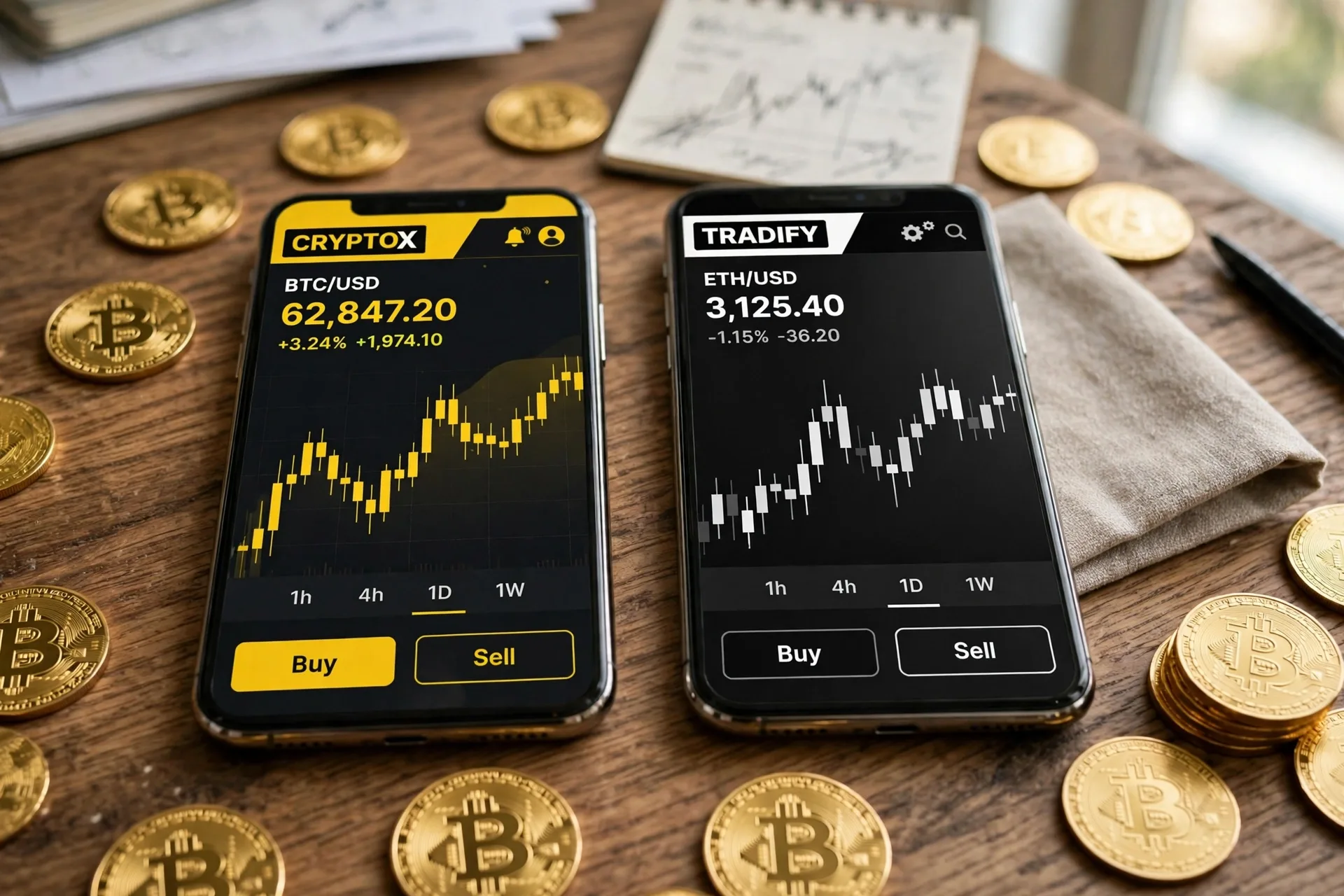
OKX vs Binance: Which Crypto Exchange Wins for US Traders?
Binance wins on liquidity and coin selection, while OKX wins on slightly cheaper base spot maker fees and a stronger built-in Web3 wallet. Americans can’t use either global platform. That leaves Binance.US and OKX US as the real choice in the United States, and both of them offer spot trading only.
Last updated: November 14, 2026. Fee figures come from each exchange’s published base-tier schedule. They change often, so check the official fee pages before you trade.
OKX vs Binance at a Glance
Binance is the larger exchange by trading volume and listed assets, and OKX matches it on core fees while offering a more integrated self-custody wallet. The OKX vs Binance table below sets the two global platforms beside the US-facing versions that American traders can actually open. Start with row one.
| Feature | Binance (Global) | OKX (Global) | Binance.US | OKX US |
|---|---|---|---|---|
| Available to US residents | No | No | Yes (most states) | Yes (most states) |
| Base spot fee (maker / taker) | 0.10% / 0.10% | 0.08% / 0.10% | Separate US schedule | Separate US schedule |
| Native token discount | BNB (25% off spot fees) | OKB (tier-based) | BNB | Limited |
| Futures and margin | Yes | Yes | No | No |
| Approximate listed coins | 400+ | 300+ | Narrower US list | Narrower US list |
| Proof of reserves | Monthly, zk-SNARK | Monthly, Merkle tree with zk-STARK | Not equivalent | Inherits OKX reporting |
| Self-custody wallet | Binance Web3 Wallet | OKX Wallet | No | OKX Wallet (separate app) |
| Founder | Changpeng Zhao (CZ) | Star Xu (Xu Mingxing) | N/A | N/A |
Can US Residents Use OKX or Binance?
No, US residents cannot open accounts on Binance.com or OKX.com, and both global platforms block US users through KYC (Know Your Customer) checks and IP restrictions. A virtual private network (VPN) won’t get around this safely. Routing through one breaks the terms of service on both exchanges, and accounts flagged that way face frozen funds during a withdrawal review.
Americans still have a legal route. Each brand runs a separate US entity, and BAM Trading Services operates Binance.US as a company distinct from Binance global. OKX US arrived in April 2025, after OKX settled with the US Department of Justice (DOJ) and opened a US headquarters in San Jose, California.
Binance.US vs OKX US
Binance.US offers a longer operating history in the US, while OKX US offers a newer platform tied to the OKX Wallet ecosystem. Both US versions remove 4 major global products: perpetual futures, margin trading, options, and most copy trading tools.
| US Feature | Binance.US | OKX US |
|---|---|---|
| Launch in US | 2019 | 2025 |
| Spot trading | Yes | Yes |
| Derivatives | No | No |
| USD deposits | ACH, wire, debit card (varies by state and time) | ACH and debit card (varies by state) |
| Native token perks | BNB fee discounts | Limited OKB utility |
| Self-custody link | No integrated wallet | OKX Wallet compatible |
| Coin selection | Smaller than global Binance | Smaller than global OKX |
Binance.US paused USD deposits and withdrawals in 2023 after the Securities and Exchange Commission (SEC) filed its lawsuit, then restored USD rails in 2025, so funding options on the platform have shifted several times. That history matters. Before planning a large deposit, open the funding page in the app and confirm what’s live.
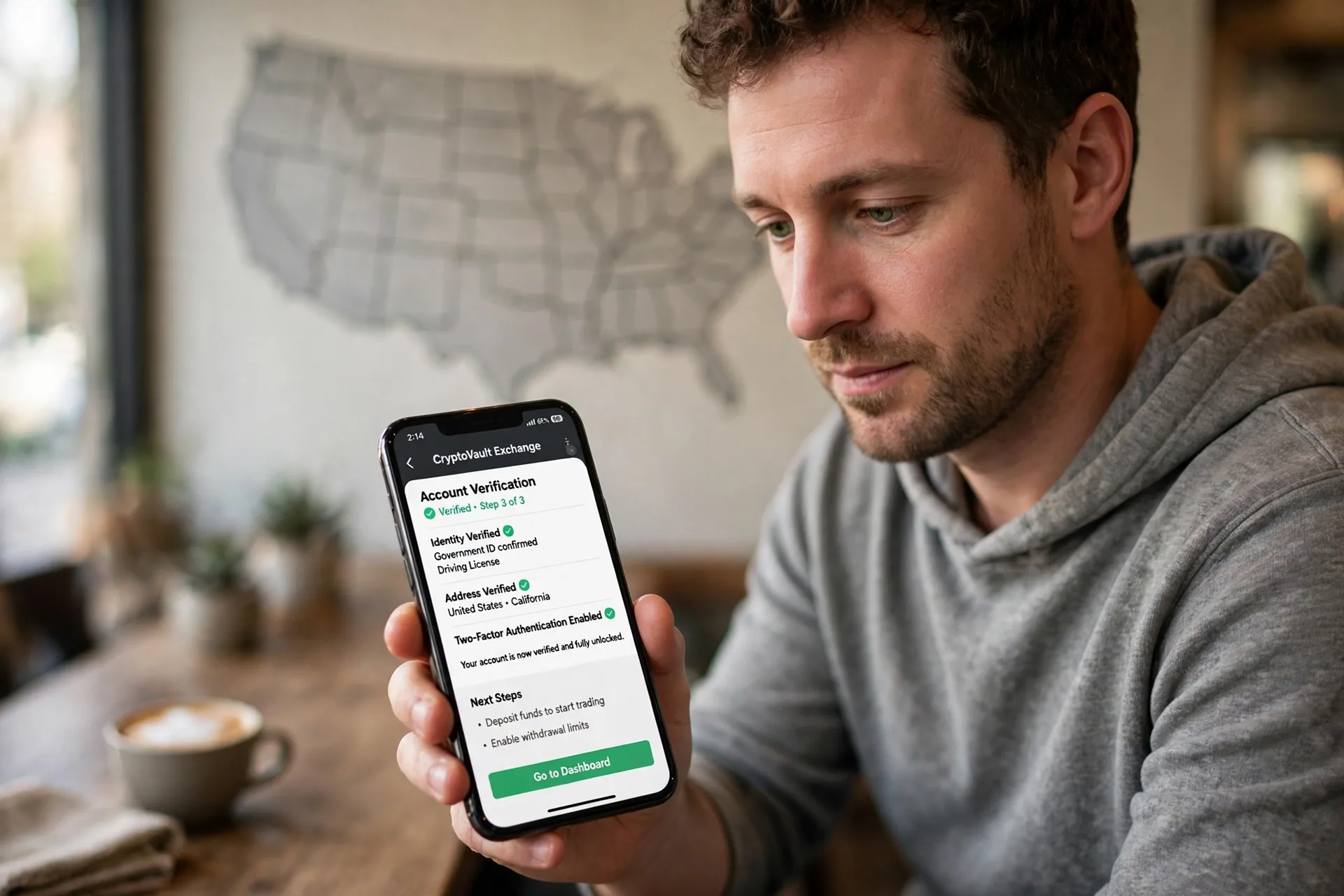
State Restrictions and the New York BitLicense
New York residents face the strictest limits because any exchange serving them needs a BitLicense from the New York State Department of Financial Services (NYDFS). Binance.US has not served New York since its launch, and several other states restrict one or both US platforms through money transmitter licensing rules.
To confirm access in your state, run through 3 steps:
- Open each exchange’s official “supported states” or legal page.
- Search for your state by name.
- Confirm the specific products allowed, since a state can permit trading but block staking.
OKX vs Binance Fees Compared
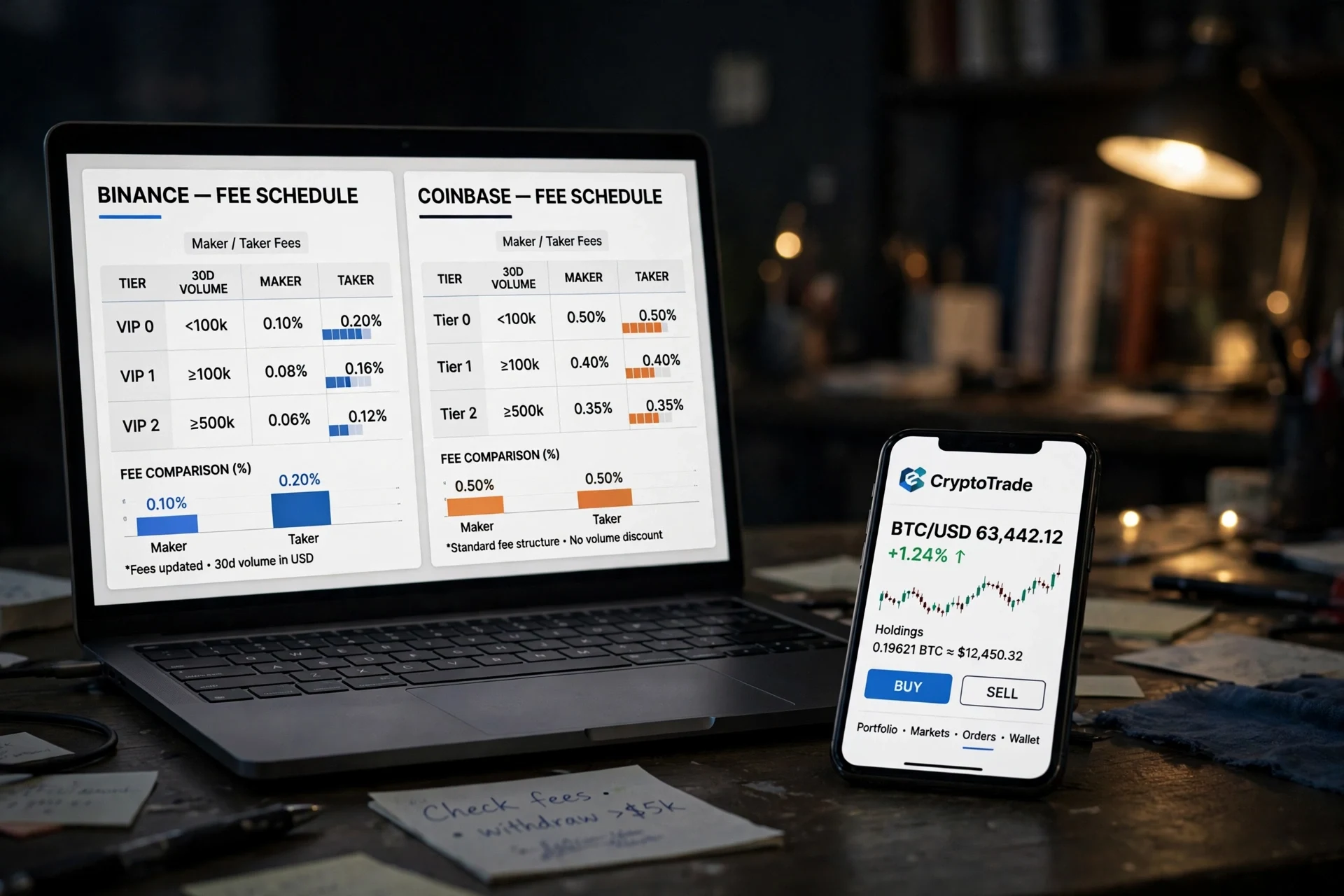
On base-tier spot trading, OKX fees vs Binance fees are nearly identical: OKX charges 0.08% maker and 0.10% taker, while Binance charges 0.10% for both, dropping to 0.075% when fees are paid in BNB. The cheapest exchange depends on 3 factors: whether you place maker or taker orders, whether you hold the native token, and your 30-day trading volume.
Spot Maker and Taker Fees
Binance is cheaper for takers who pay in BNB, and OKX is cheaper for makers who do not hold any exchange token. A maker order adds liquidity by resting on the order book, and a taker order removes liquidity by filling instantly.
| Spot Fee (Base Tier) | Binance | Binance with BNB | OKX |
|---|---|---|---|
| Maker | 0.10% (10 bps) | 0.075% (7.5 bps) | 0.08% (8 bps) |
| Taker | 0.10% (10 bps) | 0.075% (7.5 bps) | 0.10% (10 bps) |
One basis point (bps) equals 0.01%. VIP tiers on both exchanges cut these rates based on 30-day volume and asset balance, and high-volume traders reach maker rebates on some pairs.
Futures Trading Fees
Futures fees on the global platforms match at the base tier: 0.02% maker and 0.05% taker on both Binance USDⓈ-M futures and OKX perpetual swaps. Binance knocks 10% off USDⓈ-M futures fees paid in BNB. For an active futures trader running steady volume, that discount hands Binance a small edge over OKX. Neither US version lists these futures.
Deposit and Withdrawal Fees
Crypto deposits are free on both exchanges, and withdrawal fees depend on the blockchain network rather than the exchange brand. For okx vs binance withdrawal fees, the network choice changes the cost more than the platform choice does.
| Withdrawal Factor | Binance | OKX |
|---|---|---|
| Crypto deposits | Free | Free |
| Fee model | Dynamic, network-based | Dynamic, network-based |
| Low-cost networks | BNB Chain, Tron, Arbitrum, Solana | X Layer, Tron, Arbitrum, Solana |
| Highest-cost network | Ethereum mainnet | Ethereum mainnet |
| Fee shown before confirming | Yes | Yes |
Stablecoins are the cheapest case. A USDT or USDC withdrawal on Tron, Solana, Arbitrum, or another Layer 2 network usually costs under $1 to $2, while the same transfer on Ethereum mainnet runs several dollars or more once gas prices climb.
Fee Scenarios on $1,000 and $10,000 Trades
On a $10,000 spot taker trade, Binance with BNB costs $7.50, while OKX costs $10.00, a $2.50 gap. The table uses base-tier global rates for a single one-way trade.
| Trade Size | Binance Taker | Binance Taker (BNB) | OKX Taker | OKX Maker |
|---|---|---|---|---|
| $1,000 | $1.00 | $0.75 | $1.00 | $0.80 |
| $10,000 | $10.00 | $7.50 | $10.00 | $8.00 |
| $100,000 | $100.00 | $75.00 | $100.00 | $80.00 |
A round trip (buy plus sell) doubles each figure. Thin pairs hide extra costs. Spread and slippage on small-cap altcoins often outrun the trading fee itself. Scale is where the okx vs binance fees gap starts to matter: a trader moving $50,000 per month in taker volume saves roughly $150 per year by paying Binance fees in BNB.
Trading Features: Spot, Futures, Bots, and Copy Trading
Binance offers a wider asset list and deeper liquidity, while OKX offers a more unified trading interface that links exchange accounts, bots, and its self-custody wallet. Both global platforms cover 5 core trading products: spot, margin, perpetual futures, options, and automated bots.
Supported Cryptocurrencies
Binance global lists 400+ cryptocurrencies, and OKX global lists 300+, so Binance gives broader altcoin selection. USDT and USDC anchor the quote side on both exchanges. Binance adds FDUSD pairs on top. Those FDUSD pairs have carried zero-fee promotions in the past, so they’re worth watching for anyone trying to trim spot costs on Binance global.
Far fewer assets appear on the US versions. Binance.US and OKX US both drop tokens that carry higher legal risk under US securities law, so a coin listed on OKX.com isn’t guaranteed to show up on OKX US.
Derivatives Access
OKX offers a cleaner unified account for derivatives, while Binance offers more futures pairs and higher open interest. OKX’s unified trading account lets one balance serve as collateral across spot, margin, futures, and options. Binance keeps them apart. USDⓈ-M futures and COIN-M futures each sit in their own wallet, with options split off into a separate one as well.
The reason is federal. Because the Commodity Futures Trading Commission (CFTC) regulates crypto futures and requires registered venues, neither US platform gives US residents access to these derivatives.
Trading Bots and Copy Trading
Both exchanges offer free built-in trading bots, and OKX gives slightly more bot types in its main interface. Both exchanges run these 4 common bot strategies:
- Grid bots, which buy low and sell high inside a set price range
- DCA (dollar-cost averaging) bots, which buy fixed amounts on a schedule
- Rebalancing bots, which keep a portfolio at target weights
- Arbitrage bots, which capture price gaps between spot and futures
On both global platforms, copy trading lets users pick a lead trader and mirror that trader’s positions across futures and spot markets. US users don’t get the same suites.
Liquidity and Order Book Depth
Binance has the deepest order books of any centralized exchange, which means tighter spreads and less slippage on large orders. CoinGecko and CoinMarketCap consistently rank Binance first in spot trading volume, and both place OKX among the top 5 global exchanges. On a market order of $5,000 or less in BTC/USDT or ETH/USDT, the slippage difference between the 2 exchanges is negligible. Bigger orders tell another story. Above $100,000, or on small-cap altcoins, Binance’s depth produces better fills.
Security and Proof of Reserves
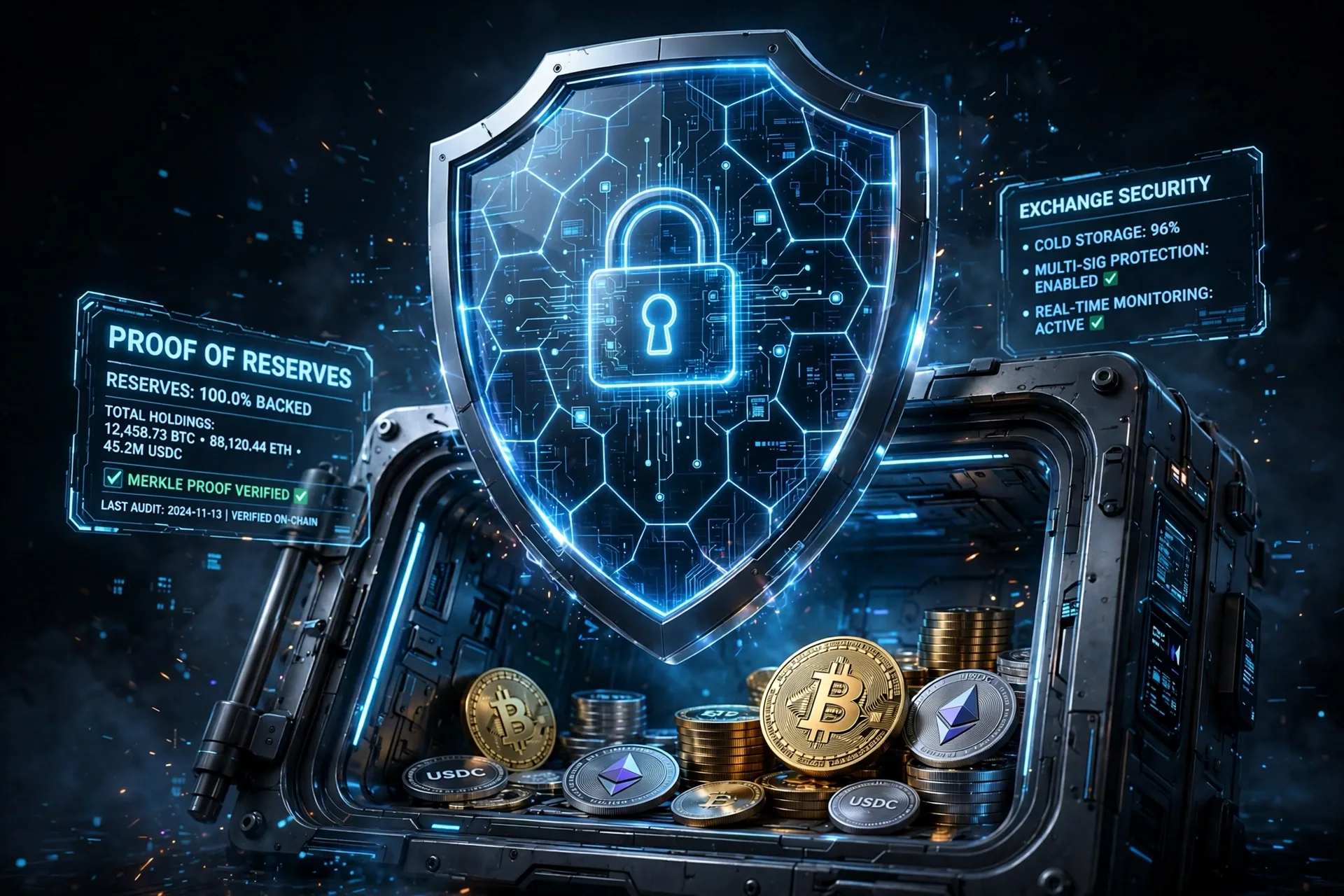
Both exchanges publish monthly proof of reserves and protect accounts with two-factor authentication (2FA), withdrawal whitelists, and anti-phishing codes. Binance verifies user balances with zk-SNARK proofs. OKX pairs a Merkle tree with zk-STARK proofs, so users on either platform can check that their own balance made it into the reserve snapshot.
| Security Feature | Binance | OKX |
|---|---|---|
| Proof of reserves | Monthly, zk-SNARK | Monthly, Merkle tree plus zk-STARK |
| Insurance fund | SAFU fund (about $1 billion) | Risk shield fund |
| 2FA options | Authenticator app, passkeys, SMS | Authenticator app, passkeys, SMS |
| Withdrawal whitelist | Yes | Yes |
| Major past incident | 7,000 BTC hack in May 2019, covered by SAFU | 5-week withdrawal freeze in late 2020 |
Neither exchange lost customer funds for good. Binance covered the 2019 loss from its Secure Asset Fund for Users (SAFU), and OKX resumed withdrawals in November 2020 once a key holder returned.
Regulatory and Enforcement Timeline
Binance and OKX have both pleaded guilty to US criminal charges, and Binance’s case was far larger. The timeline below lists the major US events.
| Date | Exchange | Event |
|---|---|---|
| June 2023 | Binance | SEC sues Binance, Binance.US, and CZ for securities violations |
| November 2023 | Binance | Binance pleads guilty and agrees to pay about $4.3 billion to DOJ, CFTC, FinCEN, and OFAC; CZ steps down and Richard Teng becomes CEO |
| April 2024 | Binance | CZ sentenced to 4 months in federal prison |
| February 2025 | OKX | OKX operator Aux Cayes FinTech pleads guilty to operating an unlicensed money transmitting business and pays over $504 million |
| April 2025 | OKX | OKX US launches |
| May 2025 | Binance | SEC dismisses its civil case against Binance |
| October 2025 | Binance | CZ receives a presidential pardon |
The Financial Crimes Enforcement Network (FinCEN) and the Office of Foreign Assets Control (OFAC) cited anti-money laundering (AML) and sanctions failures in the Binance settlement. Both exchanges now run compliance monitorships or expanded AML programs under their resolutions. Licensing abroad looks different. Binance holds licenses from Dubai’s Virtual Assets Regulatory Authority (VARA) and Abu Dhabi Global Market (ADGM), while OKX holds licenses in Dubai and several European markets.
Earn, Staking, and Web3 Wallets
Binance offers the larger Earn menu, while OKX offers the stronger self-custody Web3 wallet. Binance Simple Earn covers flexible and locked savings on hundreds of assets, and OKX Earn answers with comparable flexible savings and staking rewards. Structured products round out the OKX side.
| Product | Binance | OKX |
|---|---|---|
| Flexible savings | Simple Earn | Simple Earn |
| Locked staking | Yes | Yes |
| Liquid staking token | WBETH | OKSOL and similar tokens |
| Native blockchain | BNB Chain | X Layer (Layer 2) |
| Self-custody wallet | Binance Web3 Wallet | OKX Wallet, supports 100+ networks |
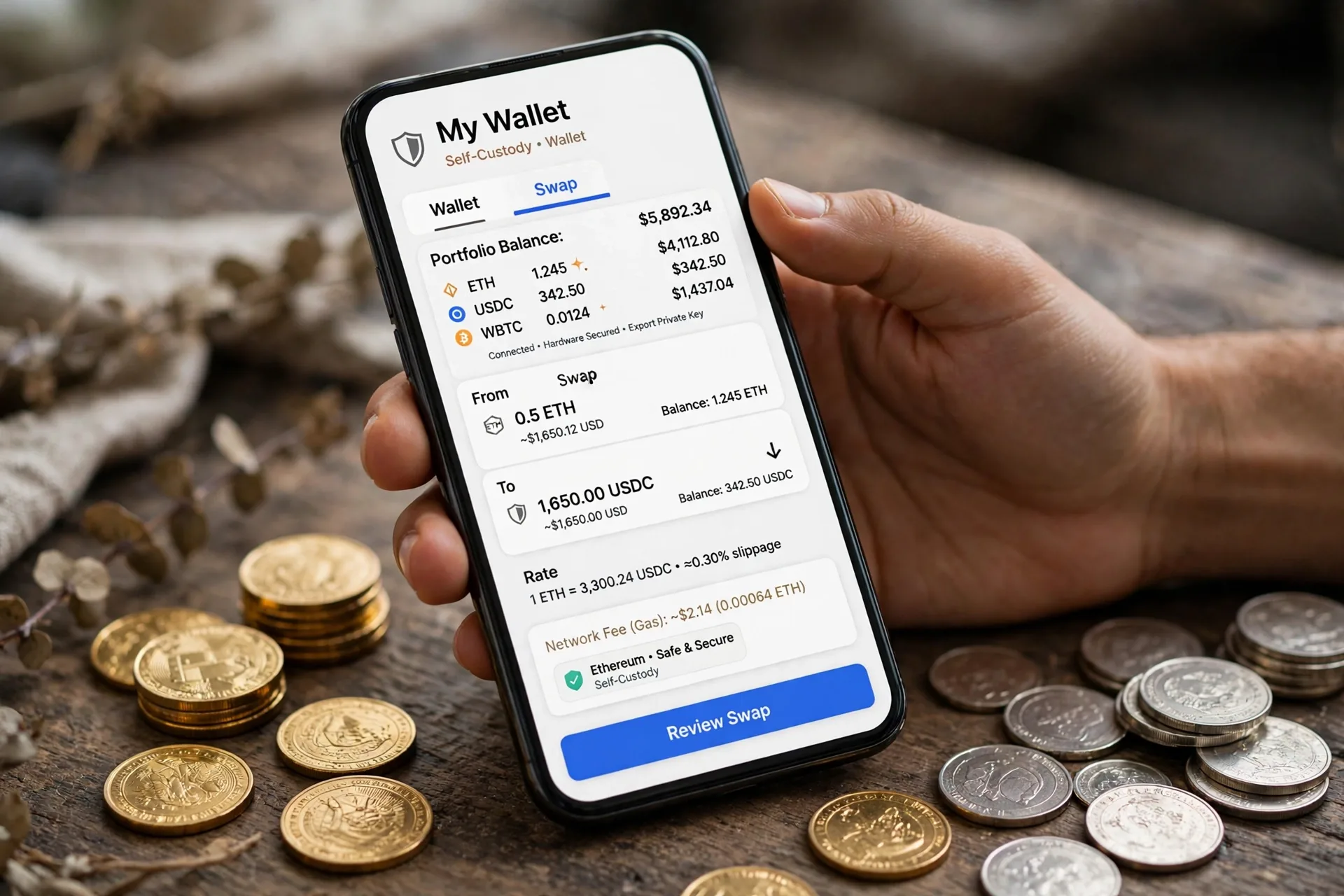
OKX Wallet runs as a standalone self-custody app with a built-in decentralized exchange (DEX) aggregator, which is why US users can download OKX Wallet even though OKX.com itself is blocked. X Layer, OKX’s zero-knowledge Layer 2 network, keeps transfers between the exchange and the wallet cheap. Binance’s approach is different. That wallet sits inside the Binance app and stays tied to the global account.
Fewer Earn products reach American users. Binance.US and OKX US offer a narrower set than the global apps, and staking availability on both US platforms varies by state.
Account Setup, KYC Verification, and USD Funding
Both US platforms require full KYC verification with a government ID, Social Security number (SSN), and a selfie before any trading or USD deposit. Approval is quick on both. Verification usually completes within minutes to a few hours, though delays run longer when ID photos are blurry or names don’t match bank records.
How to Open a US Account
To open an account on Binance.US or OKX US, follow these 6 steps:
- Download the official app from the Apple App Store or Google Play, or type the URL directly to avoid phishing sites.
- Register with an email address and a strong unique password.
- Enable 2FA with an authenticator app instead of SMS.
- Submit a driver’s license or passport, your SSN, and a selfie for KYC verification.
- Link a bank account through ACH (Automated Clearing House) or add a debit card.
- Set up a withdrawal address whitelist before moving funds off the platform.
| Deposit Method | Typical Speed | Typical Cost |
|---|---|---|
| ACH bank transfer | 1 to 5 business days to withdraw purchased crypto | Free or low |
| Wire transfer | Same day to 1 business day | Bank wire fee, often $15 to $30 |
| Debit card | Instant | Highest, often around 3% or more |
| Crypto transfer | Network dependent | Network fee only |
ACH is the cheapest fiat on-ramp on both platforms, so it’s the default pick for a first deposit or a recurring purchase. Debit cards cost the most.
Crypto Taxes for US Users and Form 1099-DA
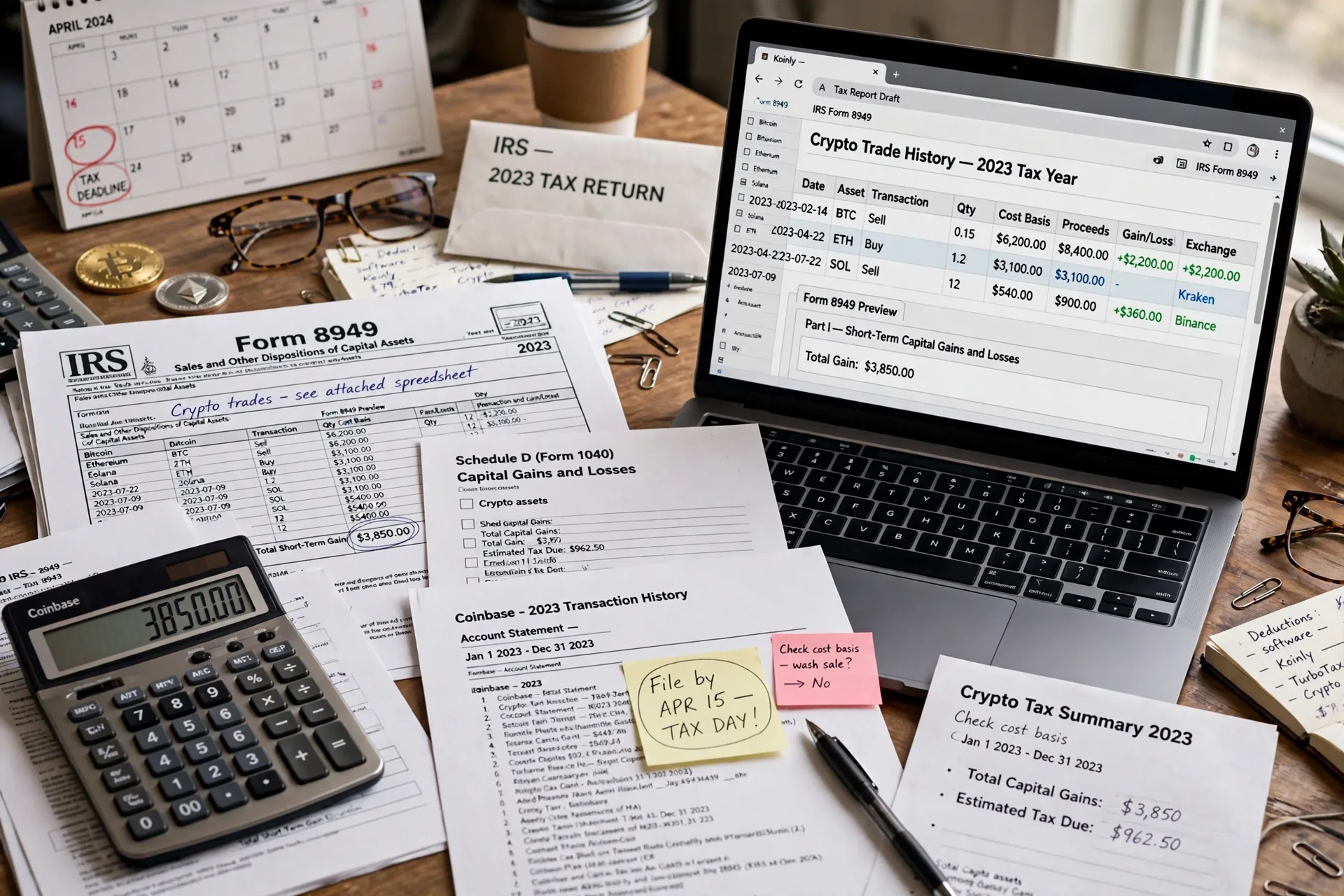
US exchanges now report crypto sales to the Internal Revenue Service (IRS) on Form 1099-DA, starting with gross proceeds for transactions made on or after January 1, 2025. Cost basis comes next. Basis reporting begins for assets acquired on or after January 1, 2026, which means 1099-DA forms for the 2026 tax year, issued in early 2027, include basis information for covered assets.
Binance.US and OKX US fall under these rules as US brokers. Global accounts are another matter. Neither Binance.com nor OKX.com issues 1099-DA forms, so any US person who traded on those platforms still owes tax and has to rebuild records by hand.
To keep clean tax records, take 4 actions:
- Export full trade history as a CSV file at least once per quarter.
- Record the cost basis of every asset transferred in from another wallet, since the receiving exchange cannot see the original purchase price.
- Import exports into crypto tax software such as Koinly, CoinTracker, or TokenTax.
- Report staking rewards as ordinary income at fair market value on the date received.
Binance vs Bybit vs OKX
For non-US traders, Binance leads on liquidity, OKX leads on wallet integration, and Bybit leads on derivatives tools, and none of the 3 global platforms serves US residents. The binance vs bybit vs okx comparison matters mostly for traders outside the United States.
| Feature | Binance | OKX | Bybit |
|---|---|---|---|
| US residents allowed | No (Binance.US instead) | No (OKX US instead) | No US option |
| Base spot fee (maker / taker) | 0.10% / 0.10% | 0.08% / 0.10% | 0.10% / 0.10% |
| Base futures fee (maker / taker) | 0.02% / 0.05% | 0.02% / 0.05% | 0.02% / 0.055% |
| Spot liquidity rank | 1st | Top 5 | Top 5 |
| Self-custody wallet | Binance Web3 Wallet | OKX Wallet | Bybit Wallet |
| Major security event | 2019 hack, 7,000 BTC | 2020 withdrawal freeze | February 2025 hack, about $1.5 billion in ETH |
The Federal Bureau of Investigation (FBI) attributed the February 21, 2025, Bybit hack to North Korea’s Lazarus Group, and that theft remains the largest crypto exchange theft on record. Bybit covered the loss. Withdrawals kept running, but the event still shows why custody design matters when you pick an exchange. US traders hunting for an alternative to Binance.US and OKX US often compare Coinbase and Kraken, which both hold extensive US licensing.
How to Test Both Exchanges Before Moving Serious Money
The safest way to choose between Binance.US and OKX US is to run a small live test on both before depositing a large balance. Published fee schedules won’t show you withdrawal speed or support quality. Real fill prices stay hidden too.
To test both platforms, follow these 7 steps:
- Deposit the same small amount, such as $100, by ACH on both platforms and record the time to availability.
- Place one limit order and one market order on BTC/USD and record the executed price against the quoted price.
- Calculate the effective cost by adding the fee to the spread.
- Withdraw $20 in USDC on a low-cost network and time the arrival.
- Contact customer support with a simple question and record the response time.
- Export trade history and confirm the CSV opens cleanly in your tax software.
- Compare total cost and time in a simple spreadsheet before choosing a primary exchange.
A test log with real timestamps settles the OKX vs Binance question more accurately than any review, since onboarding speed and support quality shift with demand. Reviews go stale fast.
Which Exchange Should You Choose?
US residents should choose Binance.US for BNB fee discounts and broader US altcoin coverage, and OKX US for tighter integration with the OKX Wallet. Non-US traders face a different choice, shown in the table below.
| Trader Profile | Better Choice | Main Reason |
|---|---|---|
| US beginner buying BTC and ETH | Binance.US or OKX US (test both) | Spot only on both; cost differences are small |
| US user wanting self-custody and DeFi | OKX US plus OKX Wallet | Wallet supports 100+ networks |
| US user needing derivatives | Neither; use a CFTC-regulated venue | Neither US version offers futures |
| Non-US high-volume spot trader | Binance | Deepest liquidity and BNB discounts |
| Non-US derivatives trader | OKX or Binance | Unified account (OKX) vs more pairs (Binance) |
| Non-US altcoin hunter | Binance | 400+ listed assets |
Outside the US, 2 priorities decide it. The OKX vs Binance decision for non-US traders weighs Binance’s extra liquidity and larger asset list against the cleaner unified account and stronger self-custody tools on OKX’s side.
FAQs
Conclusion
OKX vs Binance is a close match on fees, with Binance ahead on liquidity and coin selection and OKX ahead on unified accounts and self-custody tools. For US residents, the field narrows to Binance.US and OKX US, which both stick to spot trading and both issue Form 1099-DA. Test first. A small trial on each platform, paired with a check of your state’s access, shows which exchange fits your trading style before a large balance moves anywhere.

James
James leads crypto content at Crypto By Chance, covering exchanges, wallets, trading platforms, and blockchain technology. He researches trading fees, security features, market mechanics, and crypto regulations to explain a fast-moving market clearly. His guides and comparisons help readers evaluate their options, manage risk, and make informed decisions about digital assets.
Related Posts


