Binance vs Kraken for Americans: Fees, Safety and Verdict
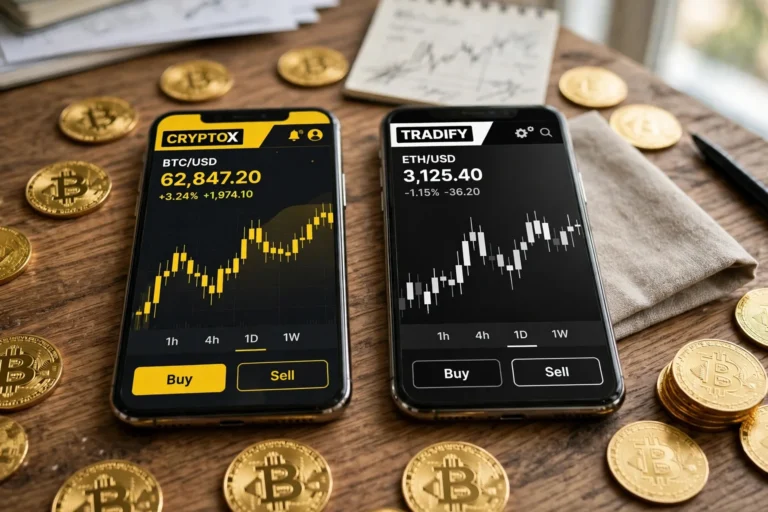
Binance vs Kraken is a matchup between two major cryptocurrency exchanges, and US buyers use it to decide where to open an account. The twist is simple. Americans cannot use Binance.com, so the real choice is Binance.US vs Kraken, and Kraken is the better pick for most US users because of its longer operating history, cleaner legal record, and steady US dollar banking.
Key Takeaways
- US residents can’t open Binance.com accounts. Americans have to sign up with Binance.US instead, which is a separate exchange operated by BAM Trading Services.
- Kraken is the stronger choice for most Americans because it has operated since 2011 and has never faced a criminal case. Its Kraken Financial subsidiary also holds a Wyoming bank charter.
- Kraken Pro and the Binance.US advanced trading view both charge maker-taker fees that drop as 30-day trading volume rises.
- Instant buy features cost more than limit orders placed on an advanced trading screen, and that holds on Kraken and Binance.US as well as Coinbase.
- Binance pleaded guilty to federal criminal charges in November 2023. The Securities and Exchange Commission (SEC) dropped its civil cases against Kraken in March 2025 and against Binance in May 2025.
- Neither Kraken nor Binance.US serves New York residents. Coinbase does, because it holds a New York BitLicense.
Binance vs Kraken at a Glance for US Users
Kraken wins the Binance vs Kraken matchup for most US users because it pairs a 2011 founding, no criminal case, and a Wyoming bank charter subsidiary with transparent Kraken Pro fee tiers. Binance.US is the narrower pick. It suits traders who want a simple app and can live with its affiliate’s legal history.
This table compares Kraken and Binance.US on the features US buyers ask about most.
| Feature | Kraken | Binance.US |
|---|---|---|
| Operating Company | Payward, Inc. | BAM Trading Services |
| Start Date | Founded 2011 | Launched 2019 |
| Criminal Case | None | Affiliate Binance pleaded guilty in 2023 |
| SEC Case Status | Dismissed in 2025 | Dismissed in 2025 |
| Bank Charter | Kraken Financial, Wyoming SPDI | None |
| USD Funding | ACH and wire | Restored after a 2023 pause |
| Advanced Platform | Kraken Pro | Advanced trading view |
| New York Access | Not available | Not available |
| Fee Model | Maker-taker, volume tiers | Maker-taker, volume tiers |
Price rarely settles it. The Kraken vs Binance decision usually turns on trust, since both platforms use similar fee structures and the real gap sits in legal history and banking stability, plus some difference in product depth.
Traders who track fee promotions on specific trading pairs should give Binance.US a look, since those deals can shift the math for a while. Kraken is the default. It’s the account to open if you want one US exchange to hold for years.
Can US Residents Use Binance?
No, US residents cannot use Binance.com, the global exchange, because Binance blocks American users from its main platform and directs them to Binance.US, a separately operated exchange with its own company, fee schedule, coin list, state licenses, and customer agreement built for the US market.
Plenty of search results lump Binance and Binance.US together as one platform. It’s a mistake. Americans who fall for it end up studying fee tables and coin lists that don’t apply to their accounts at all.
Reaching Binance.com through a virtual private network (VPN) breaks the platform’s terms of use, no matter how carefully the connection is masked. Accounts flagged as US-based can be frozen. Withdrawals can also be blocked while the review runs.
Binance.com vs Binance.US
Binance.com and Binance.US share a brand name, but they run as separate platforms, each with its own operator and its own set of regulators. The product menus differ too.
This table compares the global Binance exchange with its US counterpart.
| Item | Binance.com | Binance.US |
|---|---|---|
| Serves US Residents | No | Yes, in supported states |
| Operator | Binance group entities | BAM Trading Services |
| Product Range | Spot, derivatives, and more | Spot trading, staking where allowed |
| Coin List | Larger global list | Smaller US-approved list |
| Main Regulators | Varies by country | US federal and state regulators |
Anyone researching Binance US vs Kraken should stick to Binance.US pages and ignore anything published for the global site, however official it looks. Binance.com fee figures don’t apply to American accounts.
Who Runs Binance.US and Kraken
BAM Trading Services operates Binance.US. The company is registered with the Financial Crimes Enforcement Network (FinCEN) as a money services business and holds money transmitter licenses on a state-by-state basis.
Kraken’s operator is Payward, Inc. It’s also registered with FinCEN as a money services business, and it holds state licenses wherever a state requires them.
Kraken Financial, a Payward subsidiary, is chartered in Wyoming as a special purpose depository institution (SPDI). That detail matters. No other exchange in this comparison holds a bank charter of this kind, so Kraken carries a trust signal its rivals lack.

Which Has Lower Fees, Kraken or Binance.US?
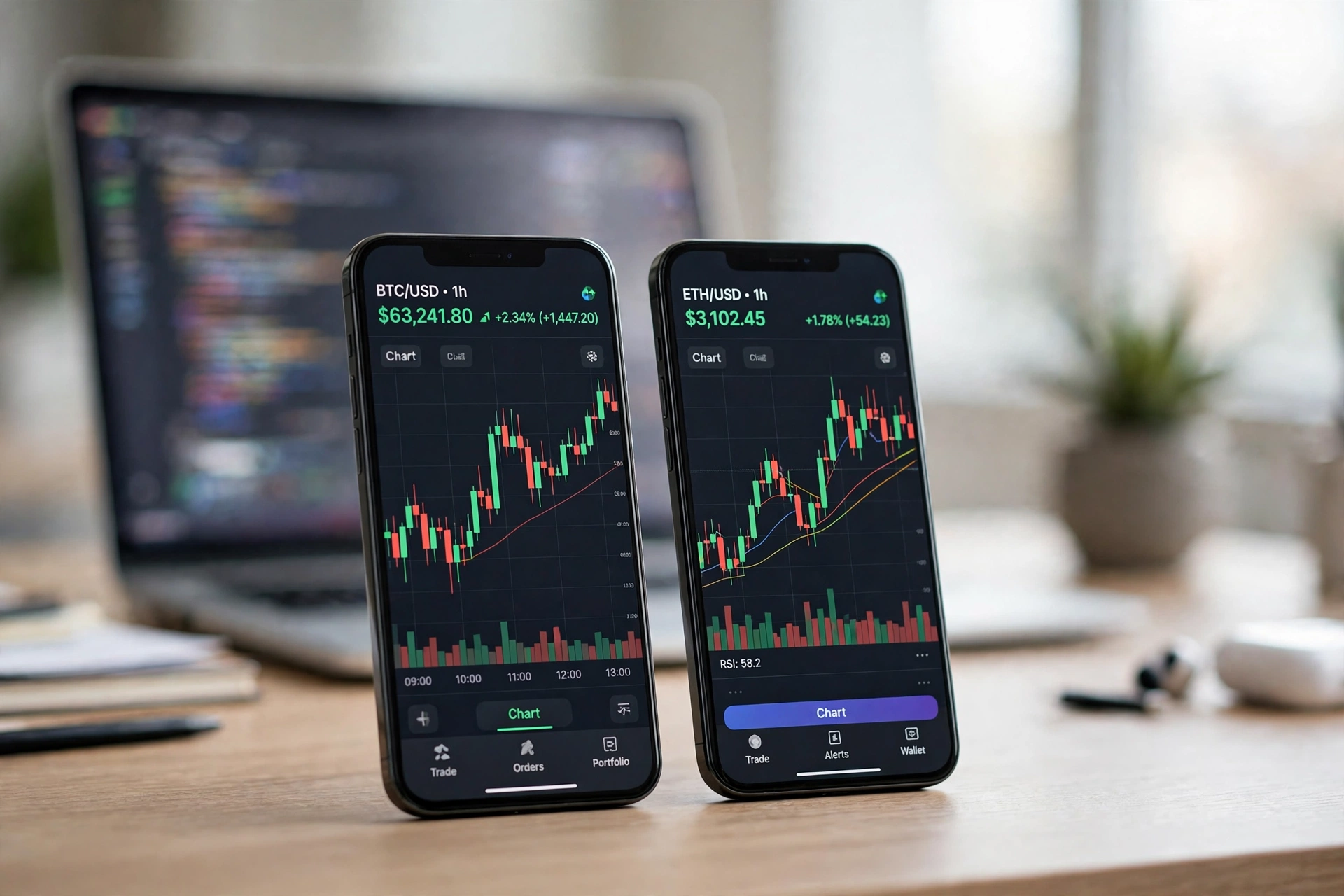
Neither exchange wins on fees in every case, because Kraken Pro and Binance.US both charge maker-taker fees that fall as 30-day volume rises, so the cheaper platform depends on your trading volume, order type, and the live fee schedule on the day you trade.
You won’t find current fee percentages in this article, because no verified figure was available at the time of writing and stale numbers mislead. Both exchanges publish live schedules. Links to each sit in the Sources section.
Searches for Binance fees vs Kraken often surface outdated numbers. Promotions are part of the problem. Binance.US has run zero-fee deals on selected trading pairs, and those offers can change without much notice, which leaves older reviews quoting rates that no longer exist.
Kraken takes another route. It sticks with stable, published tiers instead of rotating promotions, an approach that traders who want predictable costs usually prefer.
The Binance US fees vs Kraken question has a practical answer. Pull both fee pages on the same day and compare the taker rate you’ll actually pay at your volume tier. Nothing else settles it.
How Maker and Taker Fees Work
A maker fee applies when your limit order rests on the order book and adds liquidity for other traders to hit. Taker fees work the other way. You pay one when your order fills immediately against an existing order and removes liquidity.
On both exchanges, maker fees typically match or undercut taker fees. That gap is useful. Placing limit orders instead of market orders is the simplest way to trim trading costs without changing what or how often you buy.
Volume tiers lower both the maker and taker rates as your 30-day trading volume in US dollars climbs past each threshold. Casual buyers rarely leave the entry tier. That’s where rates sit highest, so occasional purchases carry the steepest percentage cost on either exchange.
Instant Buy vs Pro Trading Costs
Instant buy screens charge more than advanced trading screens on every major US exchange. The reason is the spread. That’s the gap between the price you pay and the market price, and some platforms stack an added fee on top of it.
This table compares the simple and advanced pricing models on each platform.
| Platform | Simple Buy Model | Advanced Platform | Advanced Fee Model |
|---|---|---|---|
| Kraken | Spread plus fee | Kraken Pro | Maker-taker, volume tiers |
| Binance.US | Spread-based pricing | Advanced trading view | Maker-taker, volume tiers |
| Coinbase | Spread plus fee | Coinbase Advanced | Maker-taker, volume tiers |
Switching from instant buy to the advanced screen is the biggest fee cut available to beginners, bigger than anything gained by picking one exchange over the other. Start there.
Fee Scenarios to Run Before You Sign Up
The Binance vs Kraken fees comparison only becomes useful once you plug in the dollar amounts you actually plan to trade. The math is simple. Multiply your trade size by the fee rate.
This table shows how hypothetical taker rates, not current rates from any exchange, translate into dollar costs.
| Taker Rate (Hypothetical) | Cost on $500 | Cost on $10,000 |
|---|---|---|
| 0.10% | $0.50 | $10 |
| 0.25% | $1.25 | $25 |
| 0.40% | $2.00 | $40 |
| 1.00% | $5.00 | $100 |
Use these steps to run your own comparison:
- Open the Kraken fee schedule and the Binance.US fee page on the same day.
- Find the entry tier for your expected 30-day volume on each page.
- Note the maker and taker rates for the pair you plan to trade.
- Request an instant buy quote for $500 on each app without confirming it.
- Multiply a $10,000 trade by each platform’s taker rate.
- Add Coinbase Advanced as a third column if you want a wider benchmark.
Deposit and Withdrawal Fees
Automated Clearing House (ACH) transfers are the most common and lowest-cost way to fund a US exchange account. Wires are faster. They suit larger sums that need to land quickly, though banks often tack on their own wire fees before the money ever reaches the exchange.
Debit cards cost more. On most US exchanges, card purchases carry higher charges than ACH deposits, so reserve card funding for small, urgent buys you can’t wait on.
Crypto withdrawals carry a per-asset fee that shifts with network conditions. Don’t guess. The withdrawal screen shows the exact amount, so check it every time before you confirm a transfer off either platform.
Is Kraken Safe to Use?
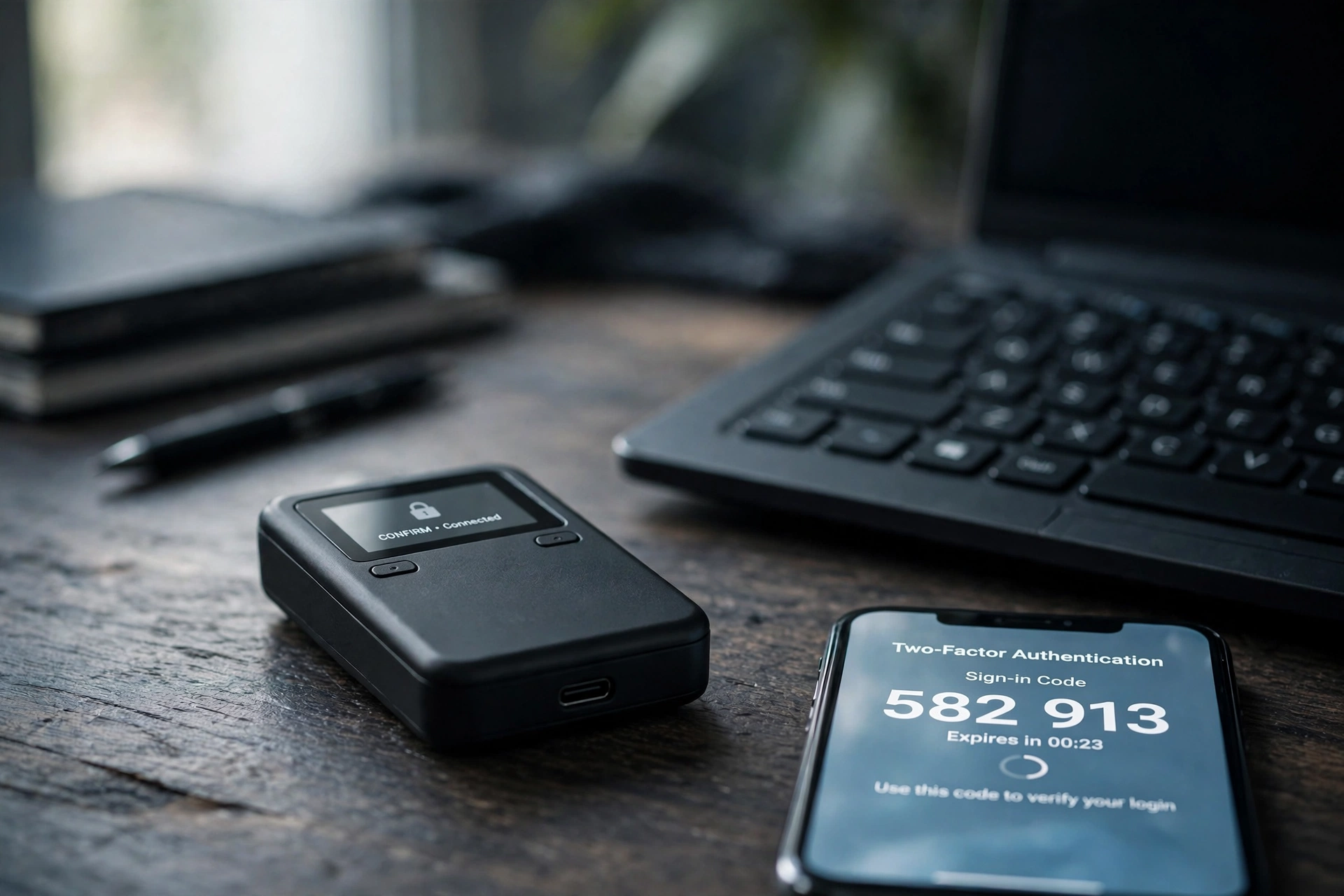
Yes, Kraken is one of the safer US crypto exchanges because Payward, Inc. has operated it since 2011, publishes proof-of-reserves attestations, keeps most client crypto offline in cold storage, and offers two-factor authentication (2FA) plus account locking tools, though no exchange matches self-custody.
Proof of reserves lets clients confirm that Kraken holds assets matching their account balances, rather than taking the exchange’s word for it. Kraken posts the attestations on its website.
Cold storage keeps private keys on devices that never touch the internet. Hackers can’t reach them. That design caps the damage an online breach can cause, because attackers who get into connected systems never touch the offline keys.
Turn on 2FA with an authenticator app rather than SMS. SMS codes are weaker. Kraken adds a Global Settings Lock as well, a feature that stops anyone, including someone with your password, from changing key account settings without extra verification.
Crypto held on any exchange isn’t covered by Federal Deposit Insurance Corporation (FDIC) insurance, no matter how strong the platform’s security looks. Self-custody closes that gap. Move long-term holdings to a hardware wallet you control.
Has Kraken Ever Been Hacked?
No, Kraken has no public record of a hack that drained client funds from its exchange wallets. In June 2024, Kraken disclosed a balance bug that a security research firm exploited to withdraw funds it wasn’t entitled to. The firm returned the funds. Kraken stated that client assets weren’t at risk.
Binance.com, the global platform, reported a hot wallet breach in 2019 and covered the losses through its Secure Asset Fund for Users (SAFU). Binance.US was a separate platform then.
Is Binance.US Legit?
Yes, Binance.US is a legitimate US exchange operated by BAM Trading Services, registered with FinCEN as a money services business, and licensed state by state, but its ties to Binance and its 2023 to 2025 banking disruption make it a higher-risk choice than Kraken.
In June 2023, the SEC sued Binance and Binance.US, naming founder Changpeng Zhao (CZ) as a defendant too. The fallout came quickly. Binance.US lost its banking partners soon after and switched to crypto-only trading, which paused US dollar deposits and withdrawals.
Dollar deposits and withdrawals have since been restored. The legal pressure eased further in May 2025, when the SEC dismissed its case against Binance and ended a lawsuit that had hung over the brand since June 2023.
The 2023 pause remains the key risk. A platform that loses its banking rails once can lose them again, while Kraken has no comparable interruption anywhere on its record.
What Happened with the Binance DOJ Settlement
In November 2023, Binance pleaded guilty to federal charges that the U.S. Department of Justice (DOJ) brought over anti-money laundering failures and unlicensed money transmitting. Sanctions violations were part of it too.
The multibillion-dollar resolution reached beyond the DOJ. FinCEN and the Treasury Department’s Office of Foreign Assets Control (OFAC) were involved, and the Commodity Futures Trading Commission (CFTC) took part as well.
CZ pleaded guilty to a Bank Secrecy Act violation and stepped down as Binance’s chief executive as part of the same resolution. Richard Teng replaced him.
Binance.US wasn’t a defendant in the DOJ case. Even so, its ownership and brand ties to Binance still shape how many US users judge whether the exchange deserves their trust.
Regulatory Timeline for Binance and Kraken
Both exchanges faced Securities and Exchange Commission (SEC) lawsuits that ended in 2025 dismissals, but only Binance pleaded guilty to federal criminal charges, which makes Kraken’s regulatory record cleaner for US users comparing the two platforms on trust rather than on fees alone.
This table lists the major regulatory events for each exchange in date order, and each date should be checked against the primary filings in Sources.
| Date | Exchange | Event |
|---|---|---|
| Sep 2020 | Kraken | Wyoming approves Kraken Financial SPDI charter |
| Nov 2022 | Kraken | Settles OFAC sanctions matter |
| Feb 2023 | Kraken | Settles SEC staking charges, ends US staking program |
| Jun 2023 | Binance.US | SEC sues Binance, Binance.US, and CZ |
| Jun 2023 | Binance.US | Banking partners exit, USD rails paused |
| Nov 2023 | Kraken | SEC sues Kraken as unregistered exchange |
| Nov 2023 | Binance | Binance and CZ plead guilty, CZ steps down |
| Early 2025 | Binance.US | USD deposits and withdrawals return |
| Mar 2025 | Kraken | SEC agrees to dismiss its case |
| May 2025 | Binance | SEC dismisses its case |
The 2025 dismissals reflect a broader SEC shift on crypto enforcement. A plea is different. Those dismissals don’t erase Binance’s 2023 criminal guilty plea, which stays on the company’s record regardless of what the SEC does next.
Is Kraken Available in All 50 States?
No, Kraken is not available in all 50 states, because New York residents cannot open accounts while the exchange operates without a New York BitLicense, and some Kraken products, including staking, carry further state restrictions listed on Kraken’s official support pages.
The New York State Department of Financial Services (NYDFS) issues the BitLicense, and it acts as the gatekeeper for crypto businesses in the state. Any exchange serving New Yorkers needs one. A state trust charter also works.
This table compares state availability across Kraken, Binance.US, and Coinbase.
| State Question | Kraken | Binance.US | Coinbase |
|---|---|---|---|
| New York Residents | Not available | Not available | Available |
| Other States | Most supported, check list | Limited by state, check list | Most supported, check list |
| Staking Limits | Yes, by state | Yes, by state | Yes, by state |
State lists change as licenses are granted or withdrawn, so a guide that was accurate last year can be wrong today. Check before you sign up. Each exchange keeps a legal or support page listing the states it serves.
Is Binance.US Available in New York?
No, Binance.US does not serve New York residents. The exchange doesn’t hold a New York BitLicense. New Yorkers who want a major US platform can turn to Coinbase, which does hold that license and accepts residents of the state.
Does Kraken Offer Staking in the US?
Yes, Kraken offers staking to US clients in eligible states, after closing its original US staking-as-a-service program in a February 2023 SEC settlement and later restoring staking access, so check Kraken’s staking page for your state and supported assets before you commit funds.
Staking locks or delegates crypto to help secure a proof-of-stake blockchain, and the network pays you in return for that service. Rewards arrive in the same asset.
Reward rates shift with network conditions, and no verified figure is available for current Kraken or Binance.US rates at the time of writing. Check the live numbers. Both exchanges post them on their staking pages.
Binance.US offers staking too. Its availability also depends on your state, so compare which assets each platform supports and whether either one imposes lockup periods. Commission matters as well, since each exchange keeps a cut of your rewards.

Is Kraken Better Than Binance.US for Beginners?
Yes, Kraken is better than Binance.US for most beginners because its main app keeps buying simple, Kraken Pro is free when you grow, its support team answers by live chat around the clock, and its longer US record lowers the risk of sudden service changes.
This table compares the beginner experience on each platform.
| Beginner Factor | Kraken | Binance.US |
|---|---|---|
| Simple Buying | Kraken app instant buy | Binance.US app buy screen |
| Advanced Trading | Kraken Pro, free to use | Advanced view in app |
| Live Support | 24/7 live chat | Check help center |
| USD Funding History | No major pause | Paused 2023, later restored |
Spreads cost beginners more than platform choice. Learn to place a limit order on Kraken Pro within your first month, and your costs drop starting with your very next trade.
Binance.US handles simple buys well. Its 2023 banking pause, though, makes it a weaker first account for anyone who needs reliable dollar withdrawals down the road.
Kraken vs Coinbase vs Binance: Which Is Best?
Kraken is the best all-around pick in the Kraken vs Coinbase vs Binance comparison for most US traders, Coinbase is best for New York residents and first-time buyers who want a publicly traded US company, and Binance.US fits traders who chase its periodic fee promotions.
This table compares the three exchanges by best use case.
| Exchange | Best For | Key Strength | Main Drawback |
|---|---|---|---|
| Kraken | Most US traders | Clean record, bank charter | No New York access |
| Coinbase | Beginners, New York residents | Public company, BitLicense | Simple buy pricier than Advanced |
| Binance.US | Promotion hunters | Fee promotions on select pairs | Affiliate’s 2023 guilty plea |
Because Coinbase trades on the Nasdaq, it files public financial reports that anyone can read before trusting the company with money. Its SEC case is over, too. The agency dismissed it in February 2025.
People asking which exchange charges the lowest instant-buy spread won’t find one fixed answer. Spreads move with market conditions. Asset choice and order size also change them, and no verified figure is available to settle the question. The only fair test is to request a live quote on each app for the same amount at the same moment.
How to Transfer Crypto from Binance.US to Kraken
You can transfer crypto from Binance.US to Kraken by generating a deposit address on Kraken, withdrawing the asset from Binance.US to that address on the same blockchain network, and paying the Binance.US withdrawal fee plus any network fee shown before you confirm.
Follow these steps to move funds safely:
- Log in to Kraken and open the deposit screen for the asset you plan to send.
- Select the blockchain network, such as Bitcoin or Ethereum, that Binance.US also supports for that asset.
- Copy the Kraken deposit address, plus any memo or destination tag the asset requires.
- Log in to Binance.US and open the withdrawal screen for the same asset.
- Paste the address, select the matching network, and enter a small test amount.
- Review the withdrawal fee and confirm with 2FA.
- Wait for the test deposit to appear on Kraken, then send the remaining balance.
Sending crypto on the wrong network can cause permanent loss, and exchanges usually can’t reverse a transaction once the blockchain records it. Match the network on both screens. Every time.
Network fees rise when blockchains get congested. Timing helps, since sending during quieter periods often lowers the cost, which matters most for smaller transfers where fees eat a bigger share.
Conclusion
The Binance vs Kraken choice for Americans got clearer after the 2025 SEC dismissals. Kraken comes out of that period with a clean criminal record and a Wyoming bank charter, and its dollar funding never stopped. Binance.US isn’t there yet. It’s still rebuilding banking relationships and its reputation.
As federal enforcement eases, expect both exchanges to compete harder on fees and staking access, and to fight over state coverage as well. Traders benefit. The ones who check fee schedules often and move funds when a better deal appears will gain the most.
Open a Kraken account if you want one dependable US exchange. That’s the default. Add Binance.US only if its current promotions beat Kraken Pro on the pairs you trade, and keep long-term holdings in a wallet you control.
Frequently Asked Questions

James
James leads crypto content at Crypto By Chance, covering exchanges, wallets, trading platforms, and blockchain technology. He researches trading fees, security features, market mechanics, and crypto regulations to explain a fast-moving market clearly. His guides and comparisons help readers evaluate their options, manage risk, and make informed decisions about digital assets.
Related Posts